Missing piecesInvestigations of my family history, which illuminates huge themes and burning issues—race, class, migration, globalisation, war and peace. “Missing pieces” is both about the making of white South Africa and the making of me. |
- Details
Who am I?
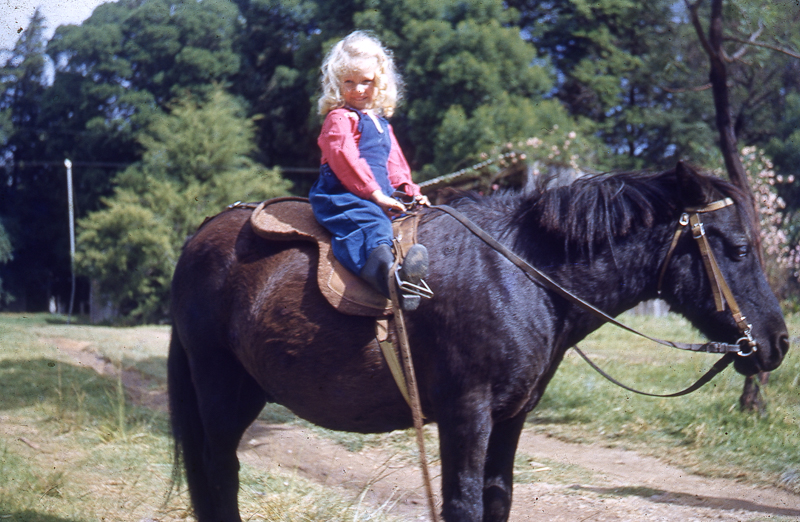 Lesley Lawson, Drakensberg resort. Photo Hector Lawson, circa 1956.
Nearing the end of my family story I was still procrastinating over one last venture: an ancestry DNA test. This would enable me to confirm the practical questions about my heritage, though not necessarily the existential ones. So it was, with some trepidation, that I sent a sample of my cheek scraping to a well-known family history site used by many South Africans.
- Details
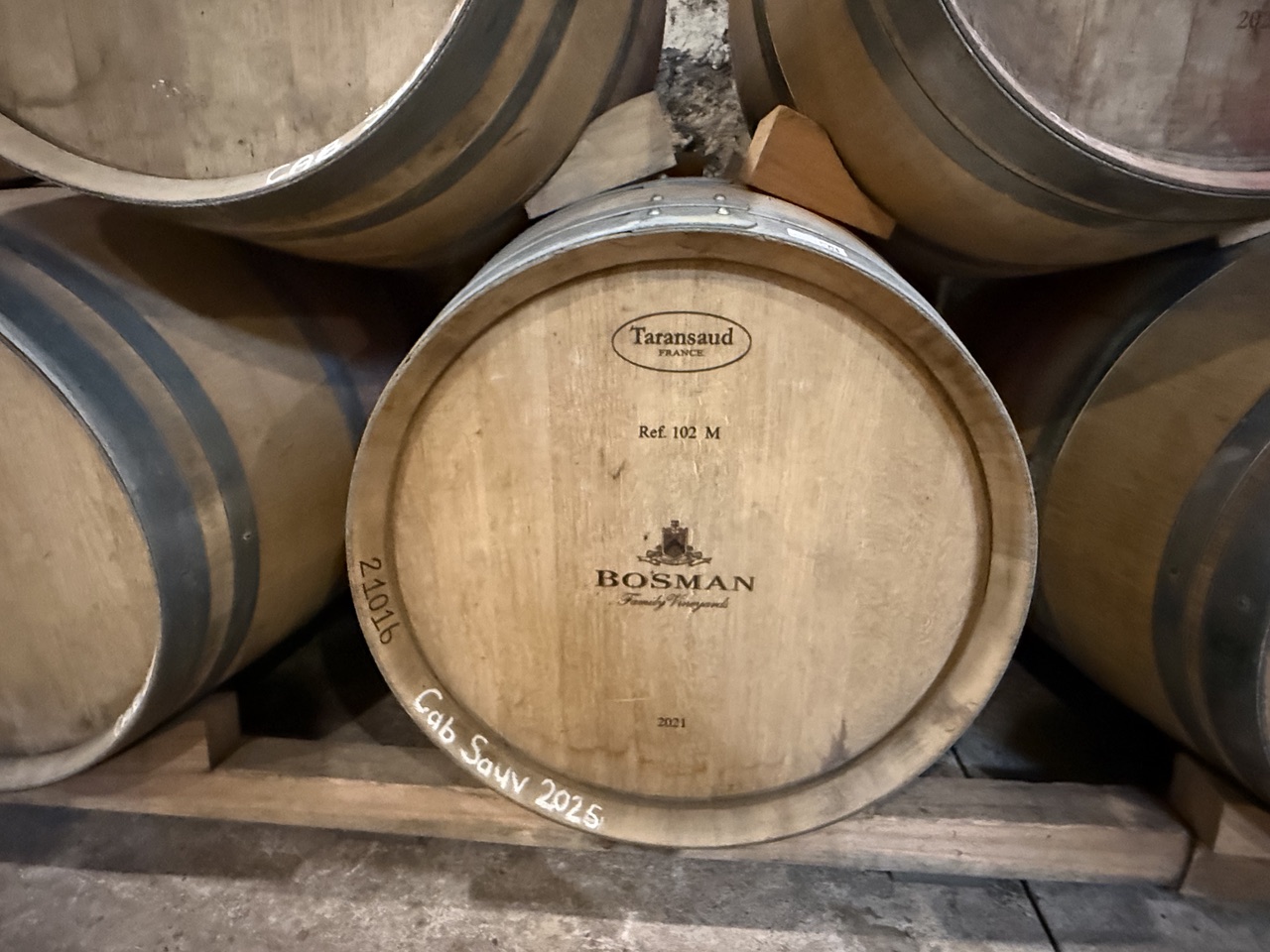
There are still Bosmans farming in the western Cape, some 18 kilometres from Hermanus Bosman’s 18th century homestead, and one fine March day in 2026 I find myself en route to Lelienfontein farm outside Wellington.
- Details
The Klercks in the emancipation era
 The Cape’s first wine farm, Groot Constantia, built and sustained by enslaved people for over 150 years.
Photo Lesley Lawson, 2026.
My fourth great-grandparents, Willem Jan and Aletta Klerck, kept a large and luxurious house in a des-res neighbourhood of the Cape settlement. Included in their possessions were 40 enslaved people. But between the ending of the Atlantic slave trade in 1807 and the abolition of slavery in 1834 a series of laws gave enslaved people new rights, and those in the Klerck home were determined to use them. By 1829 Klerck was complaining that the good order in his home had been destroyed “so that from well-behaved persons, which they formerly were, they are now become riotous and disorderly.”
- Details
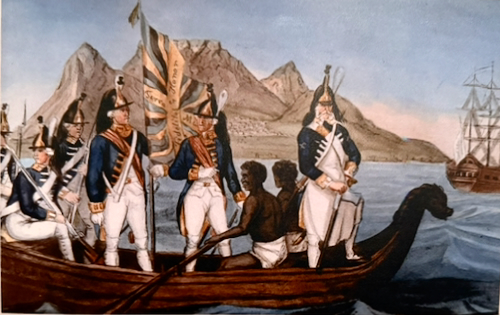 VOC army officers being rowed ashore by slaves. Table Bay, 1783. Slave Lodge.
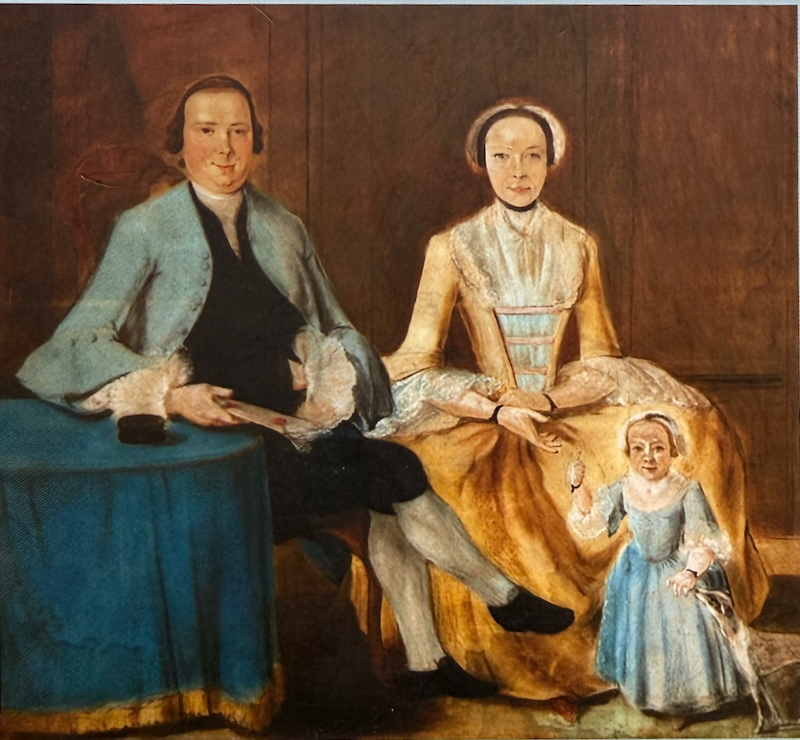
The ancestors whose portraits graced my childhood home represent the only branch of my family who came from patrician stock. Their bearing spoke of confidence in high office and they occupied a place of pride in our humble suburban home. Willem Jan Klerck and Aletta Wilhelmina Deneys arrived in the Cape colony in 1792 and were married a year later. For many years I assumed they were the first immigrants on my great-grandmother Suzanne Margaretha Klerck’s line, but this was soon corrected when I began to explore the “invisible” female ancestors.
- Details
From slavery to a modern fairly tale

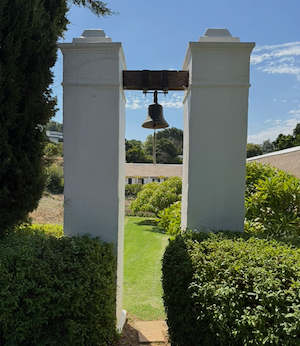 Slave bell, Grande Roche, March 2026, Lesley Lawson.
In 1995, while directing a documentary series on the Christian missionaries in South Africa (God Bless Africa), I visited a chapel in the grounds of a five-star hotel outside Paarl, which was being used as a venue for intimate, upmarket weddings.
- Details
Love and marriage in the winelands
In 1707 my seventh great-grandfather Hermanus Lambertus Bosman survived a terrifying journey on the high seas and sought refuge in the Cape colony (see Rough Passage). In response to his pleas the Dutch East India Company (VOC) appointed him as sick-comforter or lay preacher to the Drakenstein district, a peaceful spot inland from the settlement.
- Details
Hermanus Bosman’s journey
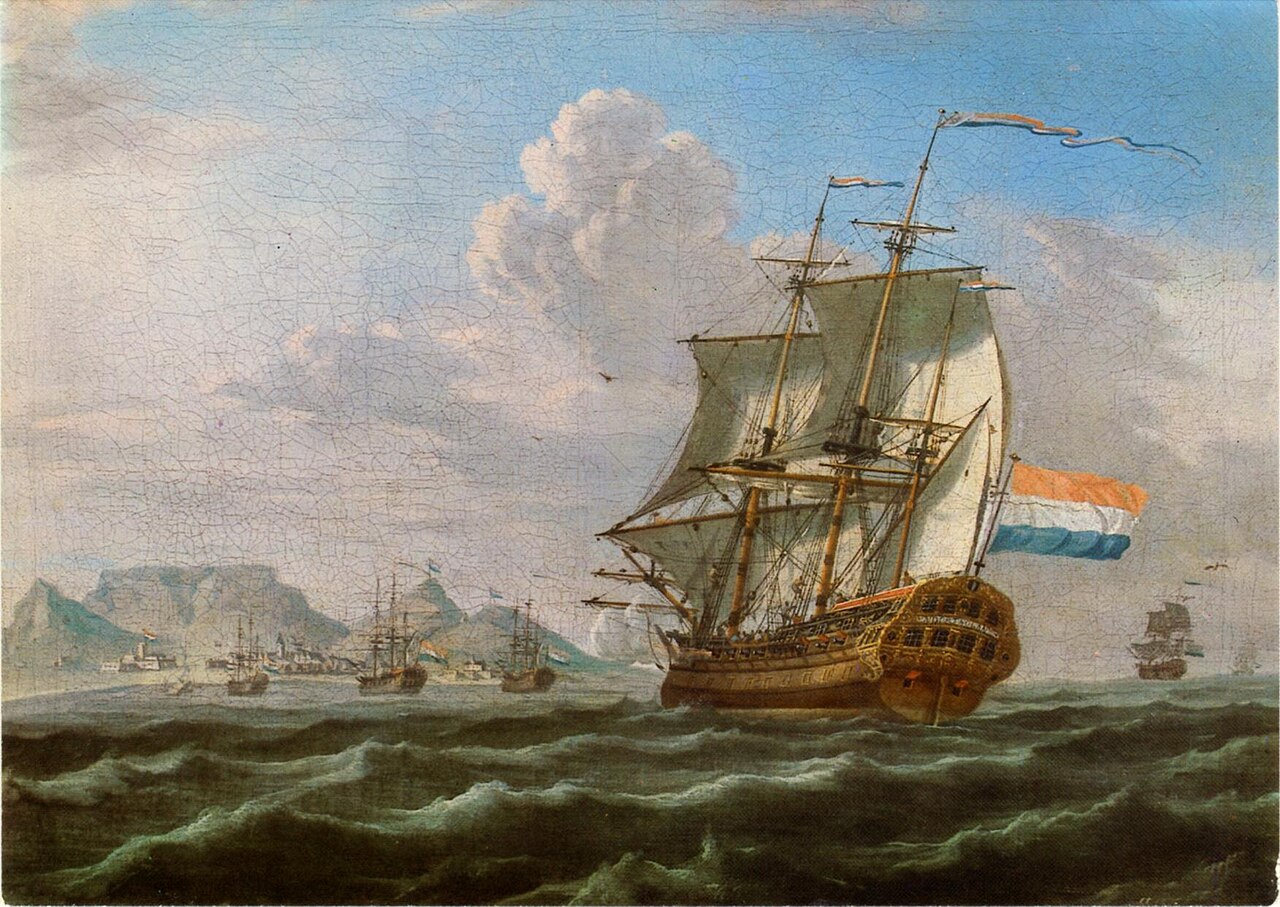 Dutch East India Company (VOC) ship in Table Bay, 1769. Public Domain via Wikimedia Commons.
My paternal grandmother Joey was a direct descendent of Hermanus Bosman (1682-1769), progenitor of the South African Bosman family. But the 1707 arrival of my seventh great-grandfather in the Cape colony happened through misadventure rather than intent.
- Details
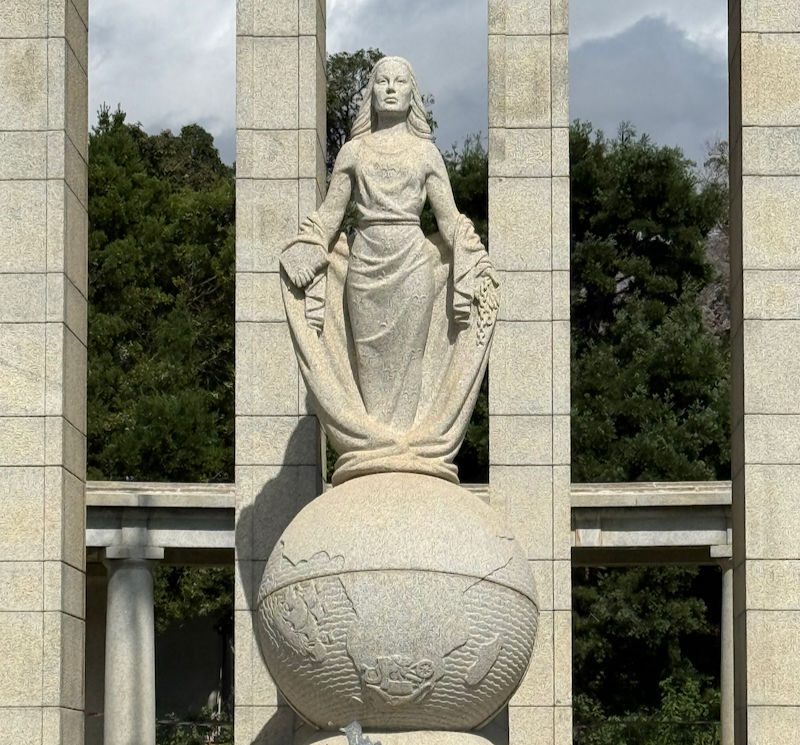 Huguenot monument, Franschhoek, 2026. Photo Lesley Lawson
Not so long ago I discovered the name of my mystery paternal grandmother, and through her, my Cape Dutch ancestry. Johanna Petronella Bosman (aka Joey) was a direct descendant of Hermanus Lambertus Bosman, and Joey’s mother a direct descendant of Willem Jan Klerk—both officials of the Dutch East India Company (VOC) who had arrived in the Cape in 1707 and 1793 respectively (See previous post, Ancestor Portraits)
- Details
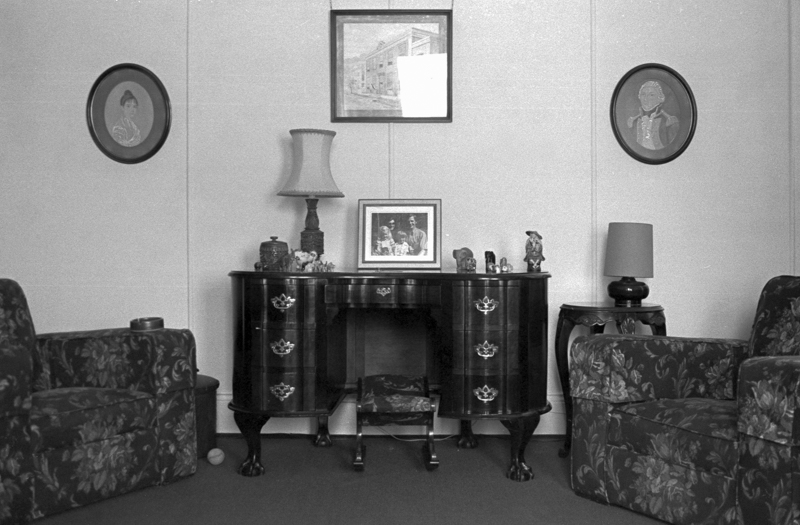 Mum’s living room, Durban 1983.Photo Lesley Lawson.
There were three water colour paintings in my childhood home, said to be of our ancestors. They hung together in the dining room, two portraits on either side of an enormous yellow mansion. I loved the oval wooden frames that held the couple in their fancy dress costumes. But the faces, not so much.
- Details
 Little is known about Grandad Lazarus and his family after their arrival in South Africa, but I have caught glimpses of them in the South African archives. It seems that they settled in Boksburg, a small town east of Johannesburg with a growing population of Jewish immigrants.
- Details
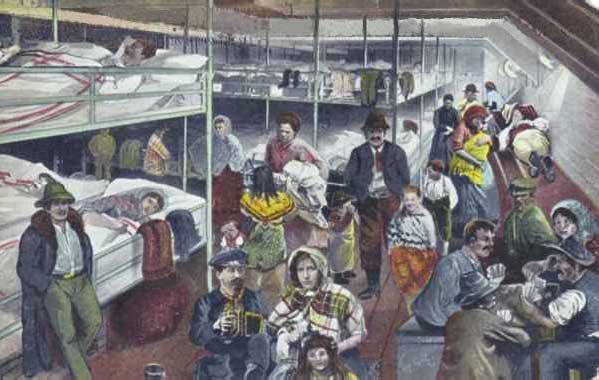 Steerage passengers on a steamship, 1890.
The disappearance of my paternal grandfather from our childhood went without a mention, and it was only when my brother began investigating my father’s family line in 2009 that I learned more about him. A sketchy biography in the South African Jewish Yearbook of 1926 provided his birthdate and sufficient detail for further research.
- Details
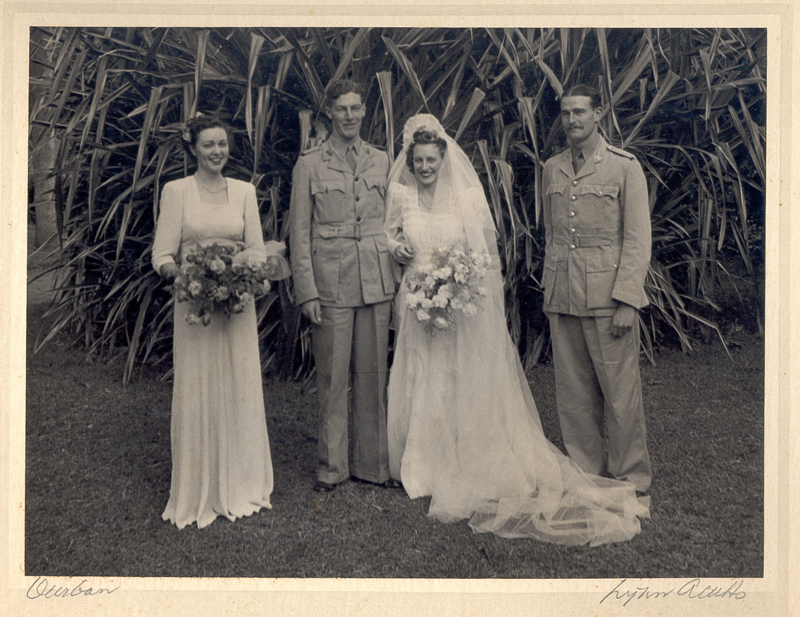 May 5, 1943: just married! My parents’ wedding album shows them posing proudly in a lush Durban garden—dad and his best man in their starched army uniforms, mum and bridesmaid resplendent in their white net gowns. But beneath the glamour, this album is the cipher of family secrets.
- Details
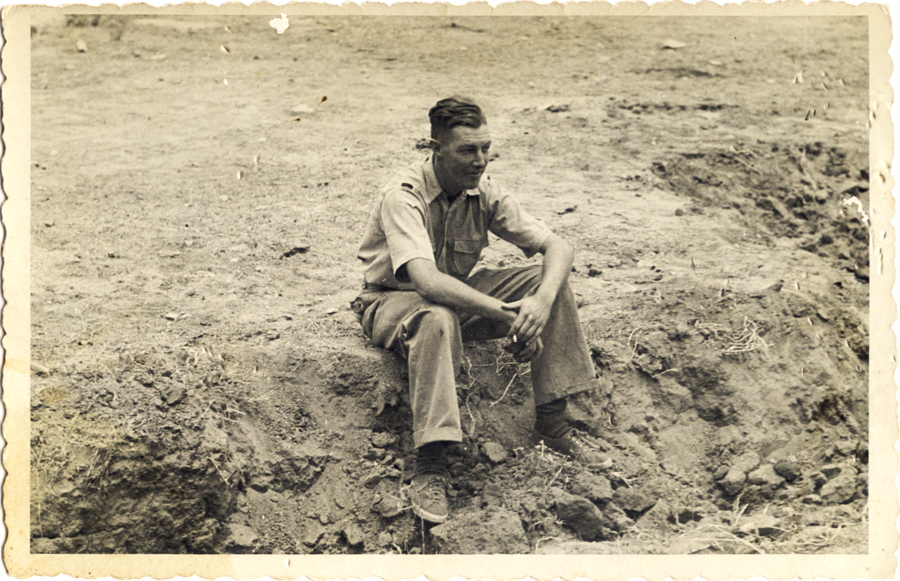
Hector Lawson
Mum said never to ask Dad about the war. My brother and I once found some medals in a dusty old box but we never mentioned it. There was also a battered album with postcards of crumbling African cities and faded photographs, taken in the desert by my father.
- Details
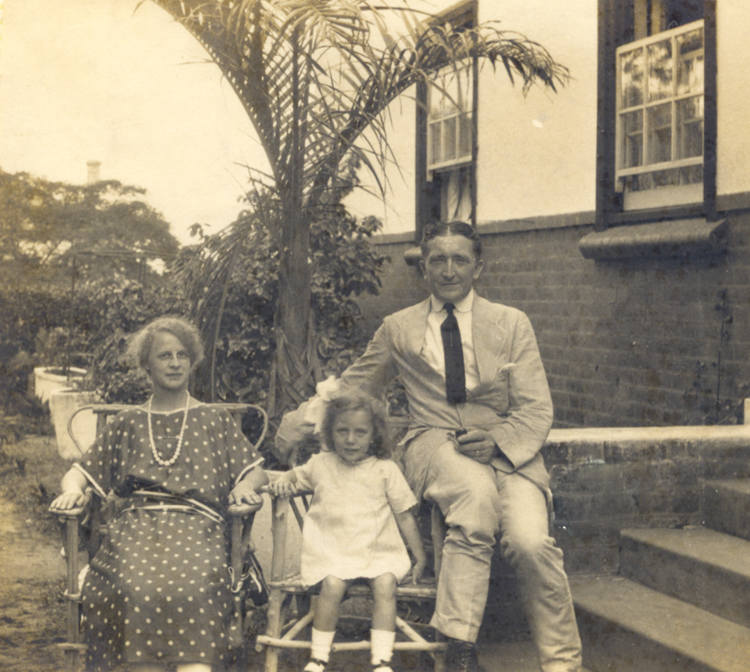 Mabel, Jean and Samuel Roach in a Durban garden, circa 1925.
After his diagnosis with phthisis, Grandfather Samuel’s first thought must have been to take his family away from the mines and the polluted environment of Johannesburg.
- Details
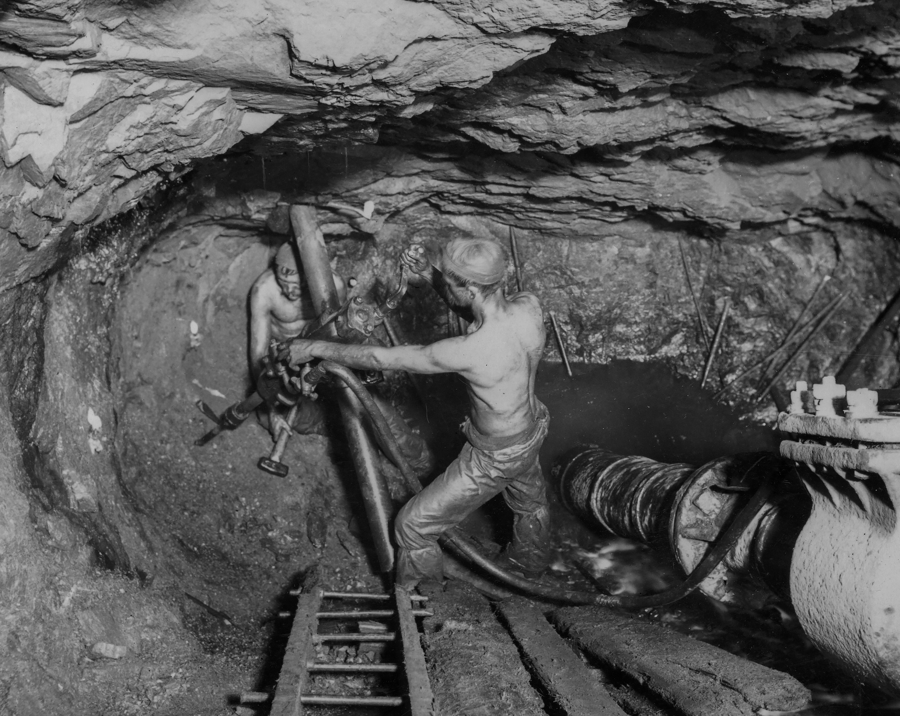 By 1906, large numbers of Cornish miners were leaving the Witwatersrand and returning home to England with miners’ lung disease. In some Cornish villages dying men could be seen lying on their mattresses outside the houses, taking fresh air in their final days.
- Details
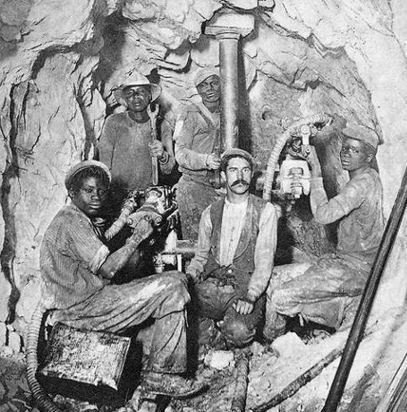 Miners underground at Langlaagte Deep, Crown Mines, 1920s.
Photograph Wikimedia Commons.
I first became interested in the lives of miners during the heady struggle days of the 1970’s when I lived in a disused mining village in Crown Mines, to the south of Johannesburg. The gold mine had recently closed, and Langlaagte Deep village was slowly emptying. Friends and I rented the cottages that had been built for white miners in the early 1900s.
- Details
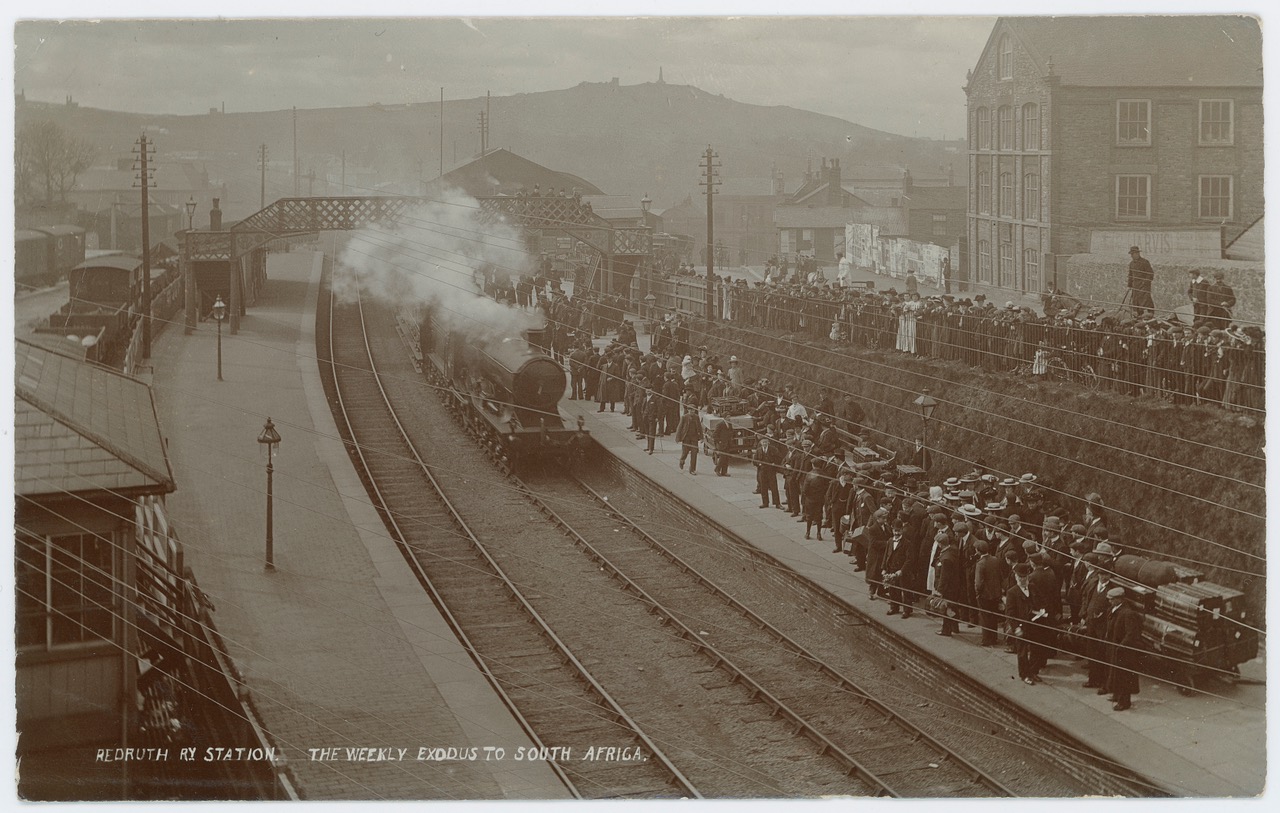
Miners departing for South Africa, Redruth station, 1905. Kresen Kernow archives.
In 1909 my grandfather, Samuel Roach, would have been one of the men on this same station platform en route to the rich gold reefs of South Africa.
An old sea captain told English writer Bernard Hollowood “of a Friday the platforms’d be packed with a great crowd of people, laughin’, cryin’, shoutin’ and so on. Then the train would steam in slowly and there'd be a great rush for the special carriages labelled “Southampton”. Then there'd be kissin’ and shakin’ and she’d move out, leaving the womenfolk and the children wavin’ and sobbin’.”
- Details

In 1908, my 16-year-old grandmother sailed with her parents on the Saxon mail ship from Southampton to South Africa. They were part of a late wave of unemployed miner families seeking work in the new gold mines. My St Ives grandfather emigrated one year later. I have often wondered what they were expecting of their adoptive country, and what values they brought.
- Details
 Gravestone of Eliza Jane Pearce, Perranuthnoe, Cornwall. Photo Lesley Lawson, 2025.
After trawling through the archival data on my Pearce and Roach forefathers I find myself trying to understand broader patterns and their significance. The first is the impact on families of the high infant mortality that defined my working-class ancestors.
- Details

Great-grandmother Eliza Jane Pearce, circa 1908.
There is pocket containing notes and keepsakes at the back of the bible that once belonged to my great-grandfather James Pearce. I have kept them as they were—letters and photographs treasured by my mother and grandmother. And most surprising, a tattered grave receipt for Eliza Jane Pearce dated 1894, Barrow-in-Furness cemetery. My great-grandmother Eliza-Jane was beloved of my mother and the subject of many conversations, but I knew for certain that she died in Durban, South Africa, and at quite a great age.