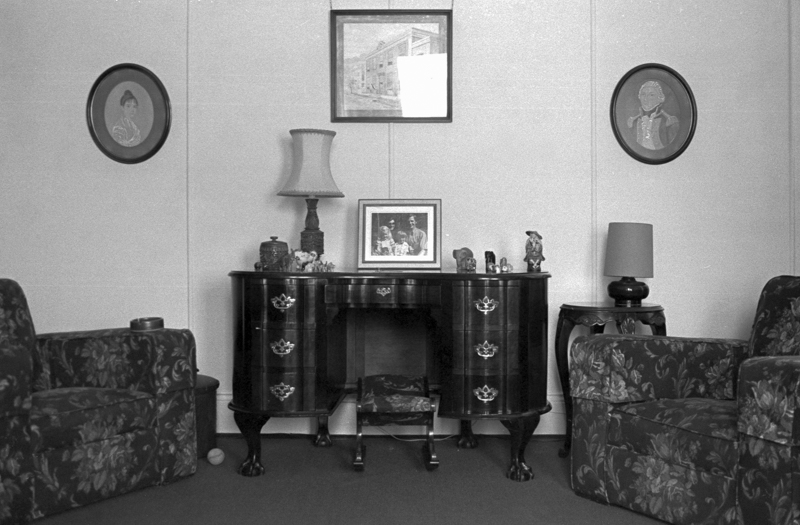
 Mum’s living room, Durban 1983.Photo Lesley Lawson.
There were three water colour paintings in my childhood home, said to be of our ancestors. They hung together in the dining room, two portraits on either side of an enormous yellow mansion. I loved the oval wooden frames that held the couple in their fancy dress costumes. But the faces, not so much.
The man had fat cheeks and long white curly hair, and the woman had those eyes that followed you everywhere, always watching us three children as we ate. There was nowhere to hide. My sister, who was a picky eater, had already tested this before I was born. I always confused the woman with my step-granny Irene, who didn’t like us.
My mother liked to tell us they were dad’s relatives, and that the man was the first Dutch Admiral in the Cape, an important person in the history of our country. That was all she knew about them. Dad never mentioned them.
When my sister was older, she speculated that dad had found the paintings at a car boot sale and was just using them to boost his pedigree. In the cold light of adulthood, I had to admit, the quality was not great. The Irene person, for example, had a large blob of white paint on her chin, by way of a highlight.
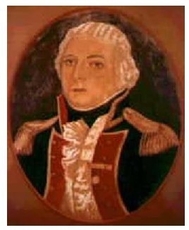 Willem Jan Klerck, oil miniature.
Mr and Mr Klerck
In the early 1990s I was breezing through the South African Cultural History Museum in Cape Town and to my astonishment came across three oil miniatures of these exact paintings. The portraits were labelled Willem Jan Klerck and Aletta Wilhemina de Neys, inhabitants of the Cape colony in the late 18th century. The house stood on Boomstraat (later Commercial Street), then one of the most fashionable streets in town. Its pediment bore the family coat of arms: a shield, with keys and a horse, representing both family lines. There was also a dress on display, said to have been worn by Aletta on her wedding day in July 1793. Later my brother established that the miniatures were also reproductions, and the originals were held by some unknown persons.
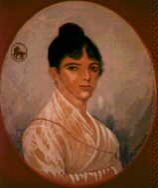 Aletta Wilhelmina de Neys, oil miniature.
At last, we had some names, but how they fitted into our family story remained a mystery. The only thing we were sure of was that they were the ancestors of our mystery grandmother—she of no name. My main concern at the time was to establish that we were not related to the current nationalist prime minister, FW de Klerk.
 Klerck house, Commercial Street, Cape Town, 1930.
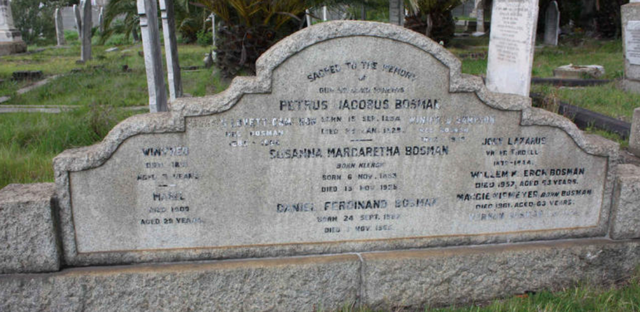
There the matter stood for another decade or so until my niece’s husband made an interesting find in the South African archives: the mention of a marriage between a Klerck daughter and my grandfather PH Lazarus. Her name was Johanna Petronella and she was the daughter of Petrus Bosman (1854-1929) and Susanna Margaretha Klerck (1853-1938). This was the first time any of us Lawson siblings had heard the names of our paternal grandmother. And it was the key to unravelling our complex Cape Dutch ancestry, of which we were blissfully unaware: the Bosman and Klerck lines.
Cape heritage
In 2009, some months after I learn the surname of my paternal grandmother, I am browsing in the Pretoria branch of Exclusive Books and find a recently published work of historical biography that sets me off on a trail of discovery. The second chapter of Karel Schoeman’s book Cape Lives of the Eighteenth Century is devoted to one Hermanus Lambertus Bosman who came to the Cape in 1706, in the employ of the Dutch East India Company. He was the progenitor of the whole Bosman clan in South Africa, so there had to be a link to our paternal grandmother, Johanna (aka Joey) Bosman.
Back at the guesthouse where I am staying, I begin searching online for some connection between Grandmother Joey and Hermanus Bosman. My feverish tapping yields a family tree, with Joey’s father as a direct descendant of Hermanus Bosman, and Joey’s mother a direct descendent of Mr and Mrs Klerck of the ancestor portraits.
So, it seems that I have a deep connection to the Western Cape, Hermanus Lambertus Bosman, was my 7th great grandfather, and I have a great swathe of Afrikaans relatives.
This was surprising in more ways than one. Brought up on the steamy Eastern seaboard of Natal and growing to adulthood in the dusty Transvaal, I had zero affinity for the Western Cape. In fact, when I first visited Cape Town in the early 1970’s I had been repelled by its postcard beauty—that great mountain looming over you everywhere you went, like a giant granny Irene. (You must know that this was the time when nothing but the Struggle mattered, and the country’s natural beauty went out with the bathwater. Or is that a mixed metaphor?).
The scandal
The same family tree found by my nephew-in-law also informed us that Joey was a divorced woman, previously married to a respectable Pretoria lawyer, with whom she had two male children. We already knew that Grandad Philip had been married before to a nice Jewish girl and this marriage had been blessed with children (two?). So, my lonely “only-child” father had at least four half-siblings. But where were they?
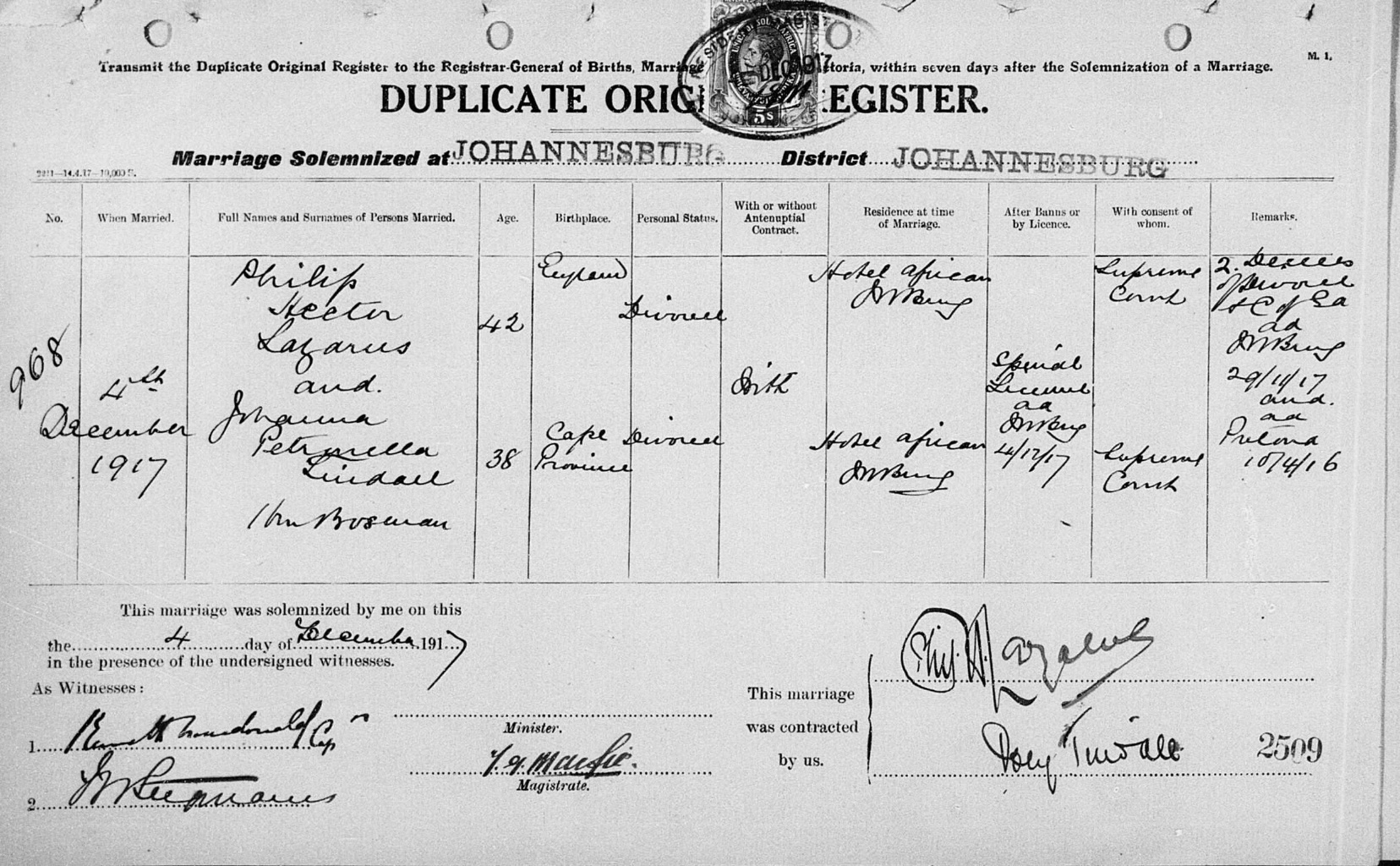
Recently I have come across Philip and Joey’s wedding certificate. They were married by a magistrate in December 1917 (he 42 years, she 38 years old), and at the time both were residing in a Johannesburg hotel. My father, Hector Lazarus was born three months later.
While this may have been a great love story, in the eyes of both their families it was not a match made in heaven. A “mixed” marriage between two divorcées—a pregnant Afrikaans woman (albeit white) and an English Jewish man would have been scandalous at the time.
The Bosmans would have been particularly inflamed by Grandad Philip’s participation in the Anglo-Boer, for which he was awarded two medals for serving the British troops. Joey’s relatives were on the other side. A total of 247 prisoners with the surname Bosman had languished in the British concentration camps—men, women, children and babies.
As the scarlet woman, Joey lost the custody of her two children and likely the affections of her family. But in death she was forgiven and her name carved on the family tombstone in Mowbray, Cape Town.
Spoiled identity
Whether my father deliberately concealed his Afrikaans identity to get by in the English-speaking community of Durban I will never know, but there was no trace of it in his life. Though I do remember the year we moved to Johannesburg when he discovered an Afrikaans butcher and enthusiastically bore home packages of strange new foods, like sosaties (marinated lamb kebabs) and suurvygies, the tangy dried fruit of a succulent, which my mother abhorred.
It seems so sad to think that this may have been his only way of honouring his mother’s memory. Of course, there is always the possibility that my paternal grandparents camouflaged their past, and my father grew up blissfully unaware of his Afrikaans roots.
Dad’s Jewish surname had been summarily dispatched by my father and his half-brother in the late 1940s. (And on my mother’s side the Cornish working class ancestry was long buried in the mine dust.) So my parents’ marriage was scrubbed clean of any socially undesirable heritage.
Nonetheless, through the stigma of his parentage, it seems that my father was extirpated from his extended family on both sides. Dozens of uncles and aunts, cousins and even half-siblings, all absent. Dad’s one and only family album includes many images of himself as a child, his dog, his parents and his army friends, but no hint of grandparents or wider family groups.
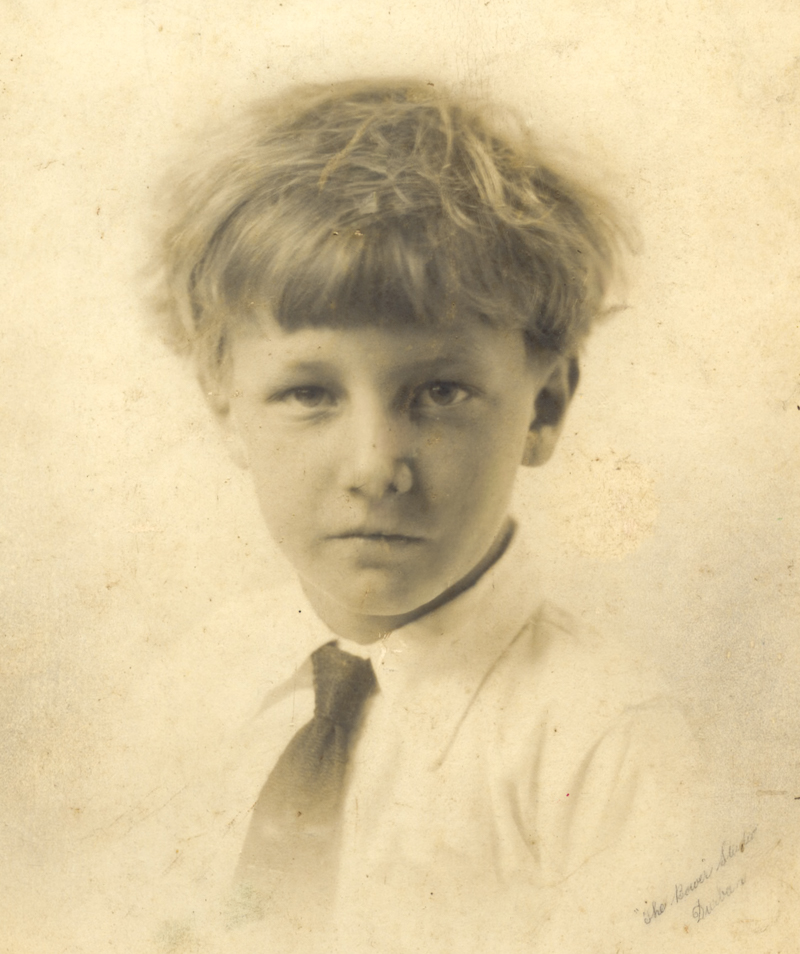
The reverberations of the scandalous marriage fed through to my own childhood and throws light on the insularity of our nuclear family—mum an only child and dad cut off from his relatives. It also explains the secrecy around my paternal grandmother and our complete lack of Afrikaans and Jewish identities.
When I was older, I became aware of my half-uncle Wilfred, and in the year of dad’s illness we lived in the same suburb of Johannesburg. But I never met him. I remember walking past Uncle Wilfred’s grand house on the way home from school and being greeted by a friendly red setter that walked a distance with me every day.