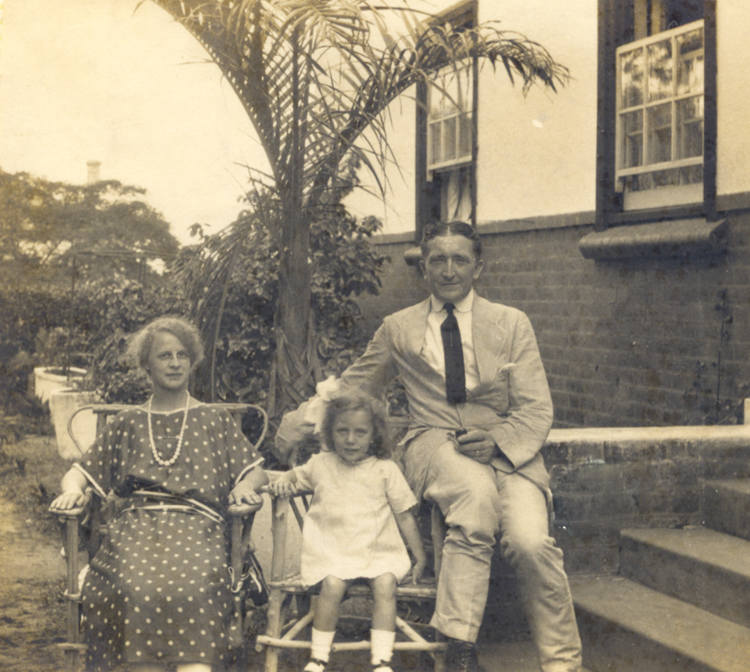
 Mabel, Jean and Samuel Roach in a Durban garden, circa 1925.
After his diagnosis with phthisis, Grandfather Samuel’s first thought must have been to take his family away from the mines and the polluted environment of Johannesburg.
I wonder if he considered returning to St Ives. But by now his father John had retired as a mariner and was struggling to support himself and his three unemployed offspring. The St Ives records show that in 1925 my great-grandfather had been excused from paying rates for his house. So, Cornwall was not an option.
When an opportunity arose to manage a small residential hotel in Durban, Samuel jumped at the chance of moving back to the seaside.
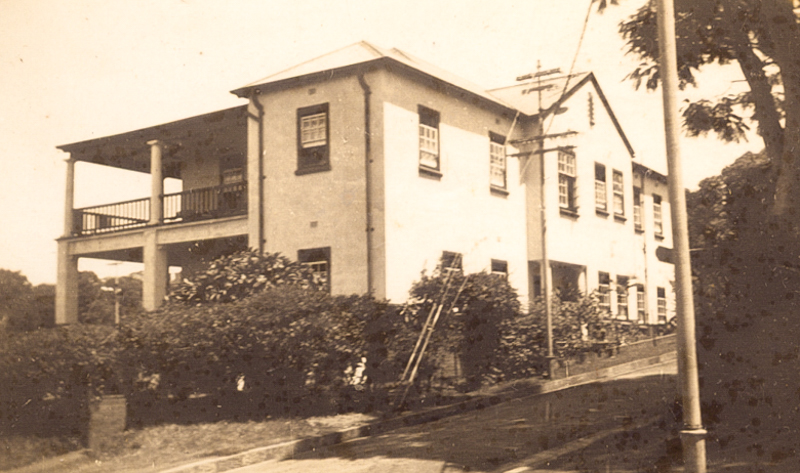 Taybank, Currie Road, Durban.
Many English visitors passed through the doors of Taybank and became lifelong friends, even visiting during my own childhood, decades later. Great-grandmother Eliza Jane was central to the smooth running of the hotel, and her hand-churned ice cream ensured that the dining room was fully booked on a Sunday. My grandmother Mabel, as during my childhood, exercised portion control and developed the reputation of being “the asker” (ie for second helpings). In fact, her one and only joke stemmed from those days, when a visiting English child, enjoying the novelty of corn on the cob, asked her for “more peas on my stick please granny”
My mother Jean grew up in the hotel and went to the school next door, Durban Girls’ College. Although she was an only child, she was surrounded by friendly adults and their children and, she liked to stress, had to learn to share. At last, the Roaches were able to live a life of ease. Holidays, expeditions to the mountains and picnics on the beach feature large in the one and only family album. Jean grew up to be a beauty, and her warm personality attracted many suitors, one of which was my father, Hector.
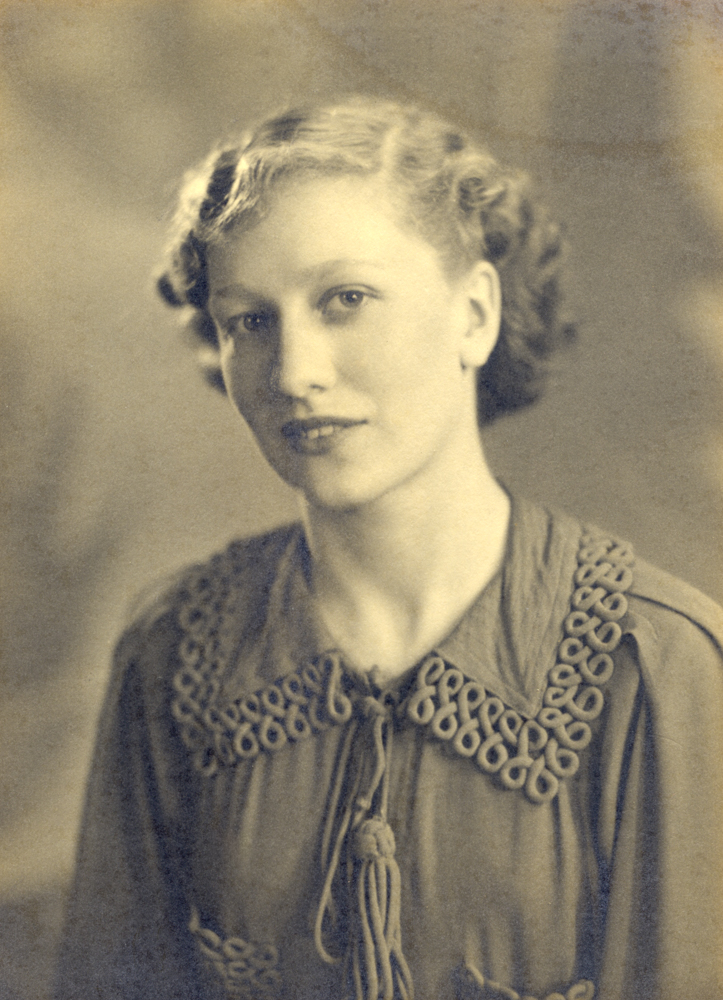 Jean Lawson, 20 years, 1938
My sister’s description of their courtship paints a vivid description of life in Durban in the 1930s. It goes like this:
"For me - life truly is a beach. You see my mum and dad met on a beach. Well to be perfectly honest my mum met my dad’s dog on Durban beach long before she had ever clapped eyes on my dad.
"Mischief was a long-haired fox terrier who was well known by most regulars at Durban’s North Beach. Mischief, like most well respected Durbanites, lived on the Berea, a sharp ridge of land overlooking the Indian Ocean. Mischief was not the sort to spend his days in idle slumber and once he made up his mind to have a swim in the surf he would not be put off. He enjoyed his outings and when his master was occupied with working or studying, he went out on his own. In those days Durban had an excellent municipal bus service and intelligent and understanding bus drivers who were on the lookout for a dog waiting patiently at certain bus stops and quite happy to stop the bus and give a dog a free ride… Anyway, he became very friendly with a certain young bathing belle and when he was sure of her integrity and faithfulness, he introduced her to his master, and you will imagine the rest…
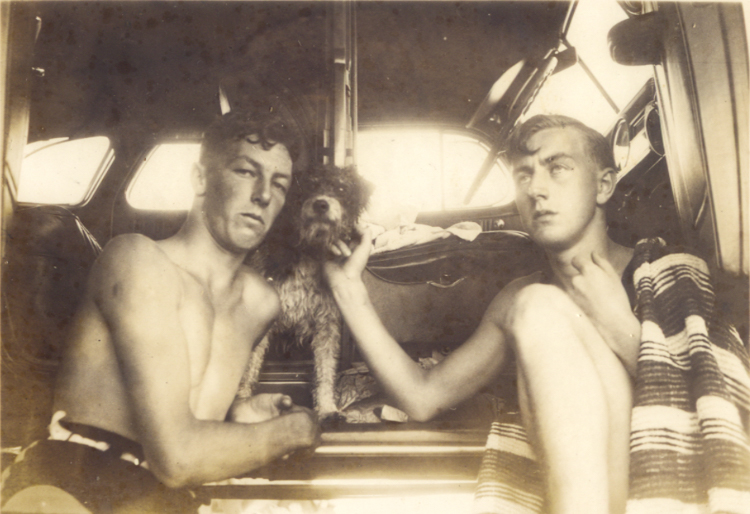
Pic Hector and Mischief with a friend, circa 1936
"In those days Durban was a relatively small seaport with a small social set and everyone living on the Berea seemed to know everyone else. What wonderful tales they told of their lives. My dad had a friend who was just crazy about cars. Uncle Norman’s first car was an amazing old bomb, missing a few essential bits and pieces, brakes being the most notable. Fortunately, it was also topless so on the steep descent down to the beach at each stop street the passengers were obliged to stand, wave frantically and shout “parp parp” at the top of their voices. There were few cars on the road in those days and those lucky enough to have wheels were well aware of this notorious car and felt it prudent to stop and let it pass."
Whatever the true facts of the matter, my parents fell in love and were married a few years later, when they were both 25 years old.
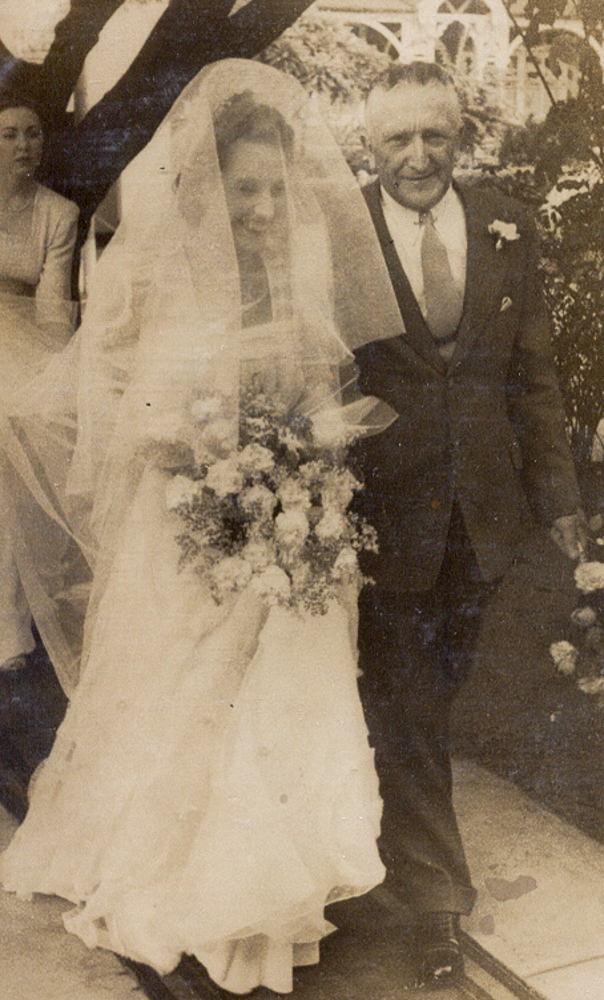 Samuel Roach walking his daughter to church on her wedding day, Durban 1943.
But for Grandfather Samuel the coastal idyll was not to last. In September 1943, a few months after my parents’ wedding, he became seriously ill and died four weeks later. He was just 59 years old. Now there were two phthisis widows in the same home. My mother told me that, on his deathbed, he made her promise to look after Mabel. A promise that she kept.
 The Lawson family picnic at Salisbury Island. Left to right: Peter Lawson, Sarah Cele, Jean, Jane and Lesley Lawson.
Circa 1953.Photograph Hector Lawson.
The beach also featured prominently in the life of the next generation. My sister remembers the five of us crammed into dad’s old car going on fishing expeditions before school, picnics on the weekend and holidays at beach cottages. Like our St Ives fishing ancestors before us, we were fully engrossed in the ebb and flow of the pilchard run, though in our case it was an amateur fascination with the immature version (sardines). My sister again:
"At certain times of the year the phone would ring early on Sunday morning with the news that the sardines were running, and we would be off down the coastal road, scanning the sea for the start of the telltale darkness in the water and the hundreds of sea birds, which indicated that the sea was boiling with fish."
 Me unpacking the picnic, circa 1953. Photo: Hector Lawson.
Although I was present in those early days, I was too young to recall our carefree beach lives. There are certainly photographs of myself at family excursions and a vague memory of falling in the swimming pool at a ‘berg resort, but by the time I was laying down memory, there were no more holidays, sardine runs or early morning fishing expeditions. Something had changed, but all I remember was having to stop fun activities like dancing and ice-skating because we could no longer afford them. Jane described how she and my brother Peter (eight and six years older than me) climbed up to the top of the wardrobe to inspect their piggy banks and found that they had been broken open. Peter also remembers being caned because dad had not paid his school fees. Dad was furious and marched into the headmaster’s office with Peter, demanding that he be caned as well.
Peter had a theory that dad went into partnership with another man at an estate agency, who failed to pay him his share of commission. That is how we lost our money and our little house at 3 Winter Avenue. Jane was always certain that dad and his father went out gambling.
None of us ever got to the bottom of this mystery. My mother knew of course, but she wasn’t going to tell.