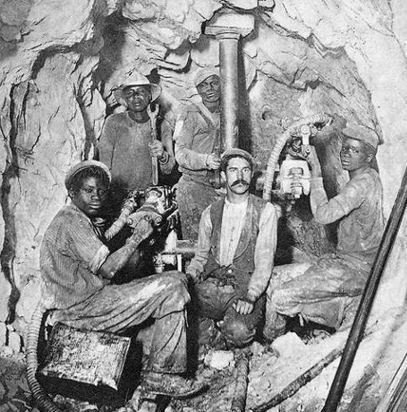
 Miners underground at Langlaagte Deep, Crown Mines, 1920s.
Photograph Wikimedia Commons.
I first became interested in the lives of miners during the heady struggle days of the 1970’s when I lived in a disused mining village in Crown Mines, to the south of Johannesburg. The gold mine had recently closed, and Langlaagte Deep village was slowly emptying. Friends and I rented the cottages that had been built for white miners in the early 1900s.
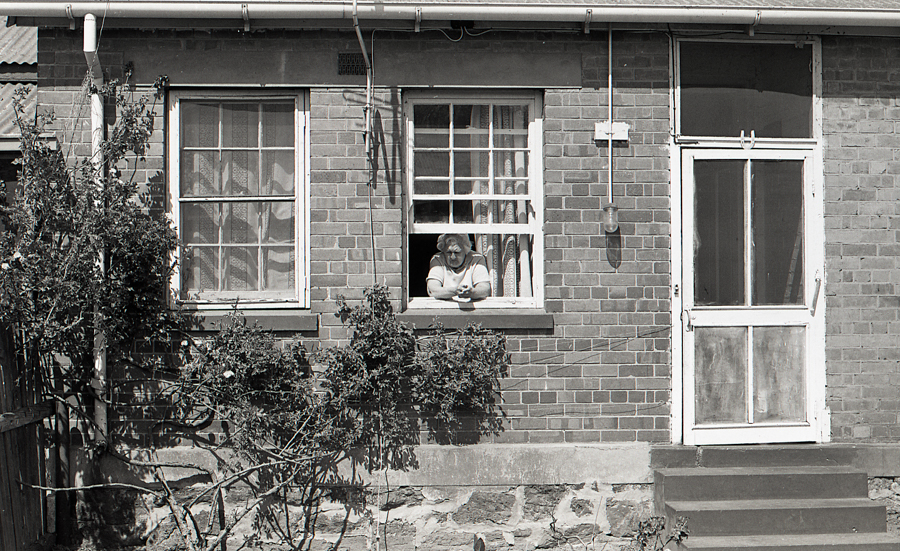 Wife of a white miner at the window of her Langlaagte Deep cottage. Photograph Lesley Lawson, 1976
When my mother first visited, she walked around with a little smile on her face, remembering the early years of her childhood on a similar mine to the east. But at the time I had zero interest in my mining ancestors and asked no questions.
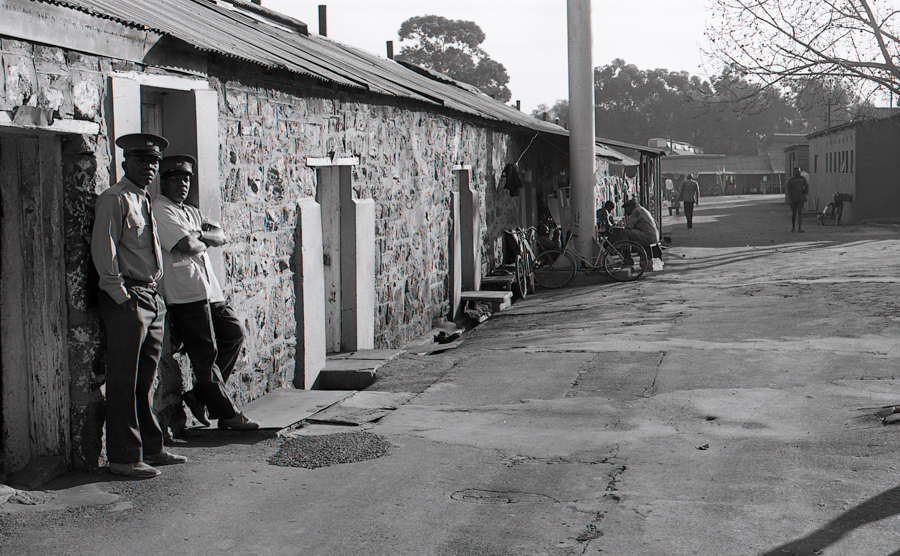 Single-sex mine compound, Langlaagte Deep, 1976. Photograph Lesley Lawson.
I spent many hours roaming the derelict mining landscape with my camera. My interest was further focussed by my friend and office mate, the social historian Luli Callinicos who was writing about the gold mining industry and the low wages and dire conditions for black unskilled miners. Employed on short-term contracts, black miners were recruited from rural areas in South Africa and neighbouring countries and forced to live in single sex hostels or compounds.
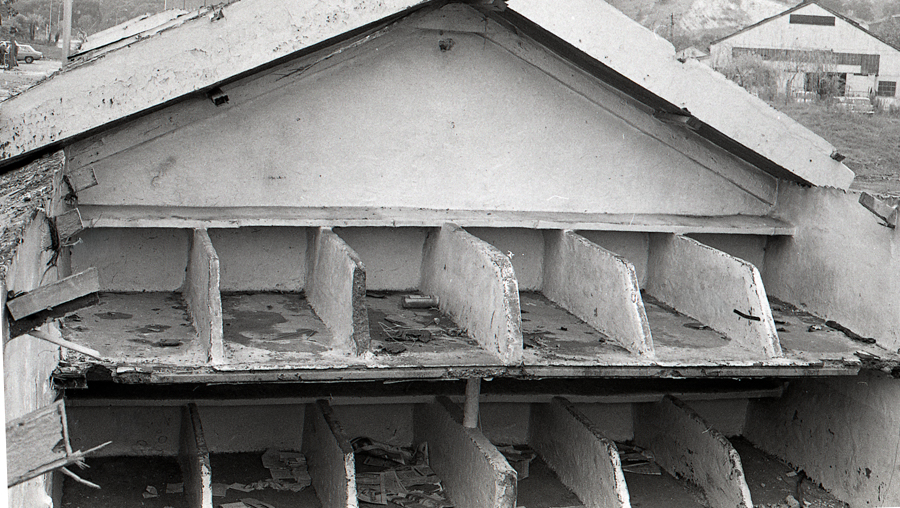 Half-demolished compound showing sleeping arrangements. Langlaagte Deep, Crown Mine. Lesley Lawson, 1976.
Skills and wages
Discovered in 1886, the Witwatersrand gold reef was the richest in the world, but the ore was very low grade and the seams deeply buried. This created the need for experienced hard rock miners, who were readily supplied by the declining Cornish industry.
Cornish miners were highly skilled and could command top wage. For example, hard rock miners in South Africa earned £6 to £9 a week in comparison with the English wage of £3 a month. Below them in the labour hierarchy were unskilled, mainly Afrikaans miners, who earned around a third of skilled miners’ wage. At the bottom of the ladder was a much greater number of black labourers who were restricted to menial roles by job reservation laws; and earned a pittance.
In time, the mine owners reduced their wage bill by introducing more unskilled white workers and restricting skilled immigrant miners to supervisory roles. The skilled miners opposed this, fearing that the Afrikaans workers would soon take their jobs, but the change went ahead, and former rock drillers became supervisors and shift bosses.
Then in 1907 mine owners increased the number of rock drills each skilled miner should supervise, from two to three. Across the Rand supervisors went on strike, but the mines were kept going by the unskilled white miners. The government brought out the army and the strike was brutally crushed.
Enter the Roaches and the Pearces
This then was the situation on the Rand when Grandfather Samuel Roach and Great-grandfather James Pearce arrived on the gold reef. Although the wages of skilled miners were under new threat, both men stepped into highly paid supervisory roles. This must have been a challenge for young Samuel, who as a house carpenter, had no significant mining expertise.
Writer R K Cope reported that circa 1910, an English mine worker was greeted on his first day by the shift boss with the words “Here is your hammer and here is your chisel, shifting spanner… and a nigger…to carry your tools.” It turned out that the English miner was earning a pound a shift in comparison with the black migrant’s wage of two shillings a day.
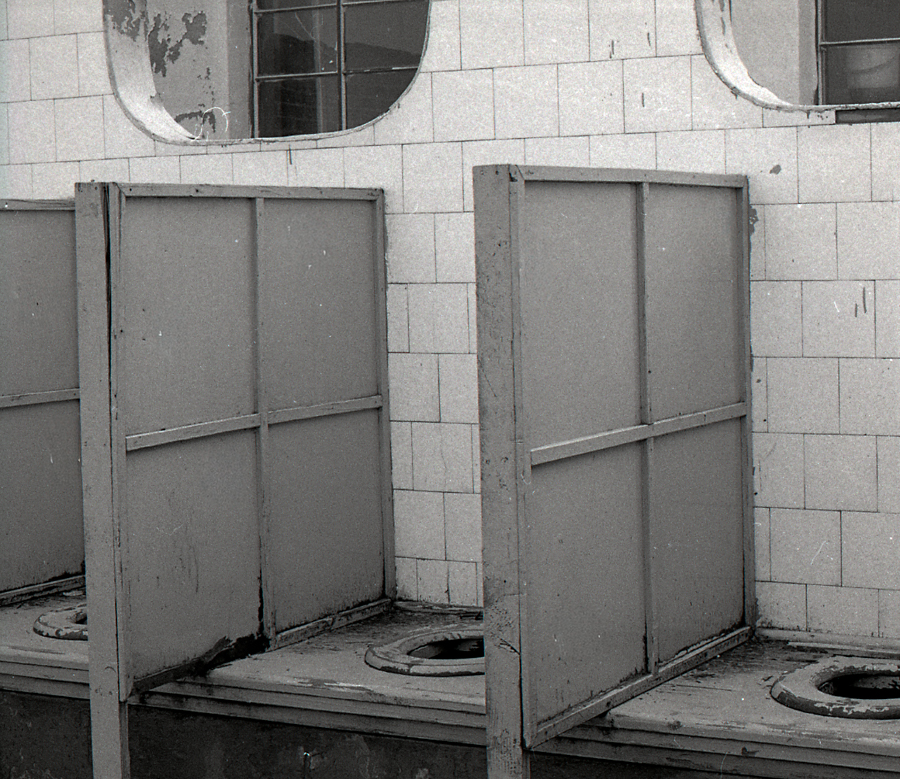 Half-demolished communal lavatory, Langlaate Deep compound, 1977.
Photograph Lesley Lawson.
These Cornish miners found themselves in charge of teams of men whose languages they did not understand. As part of their induction they were taught fanakalo, a pidgin language used on the mines, crafted to include words of instruction.
Fanakalo, (or fanaglo as it was known), was a language of command tailored to a master-servant relationship and was adopted by other white employers. In my Durban family it was never used, but I was familiar with other homes where phrases like ‘tula wena’ (shut up you) and ‘woza wena’ (come here you) were daily insults endured by domestic workers. Ironically white employers were under the impression they were fluent in isi-Zulu, an Nguni language of great sophistication and beauty.
Unite for a white South Africa
The 1907 strike was an important step towards the restructuring of the mine workforce, and the success of mine owners in quashing it led them to consider relaxing job reservation. They planned to expand the numbers of lower-paid black workers to form the bulk of the labour force. This was fiercely resisted, particularly by unskilled Afrikaans miners.
New drilling technology introduced after World War One presented a fresh opportunity to cut costs on the mines. The jack hammer drill de-skilled the mining process and enabled the replacement of skilled miners with experienced, but cheaper, black workers. White miners had lost their leverage on the mines.
In January 1922 the trade unions declared a general strike and 25,000 miners stayed away from work. In March the Rand Revolt reached a climax. Militant miners, mainly Afrikaners, armed themselves and prevented anyone from going down the mines. They marched the streets of Johannesburg under the Communist Party slogan “Workers of the World Unite for a White South Africa”.
 Mounted police charge strikers in a city centre. Rissik street, Johannesburg, 1922.
In response to the uprising, the government called out the troops. And five thousand strikers were arrested. One hundred and fifty people died during and four strike leaders were sentenced to death and hanged. By 16 March 1922 the mines were open again.
In general, the Cornish miners had little appetite for labour disputes. Grandfather Samuel did not join the strike but stayed at home. My mother, who was four years old at the time, remembers the fevered atmosphere in the neighbourhood and the fact that her cousin Doreen was forbidden from wearing her favourite red hair ribbon.
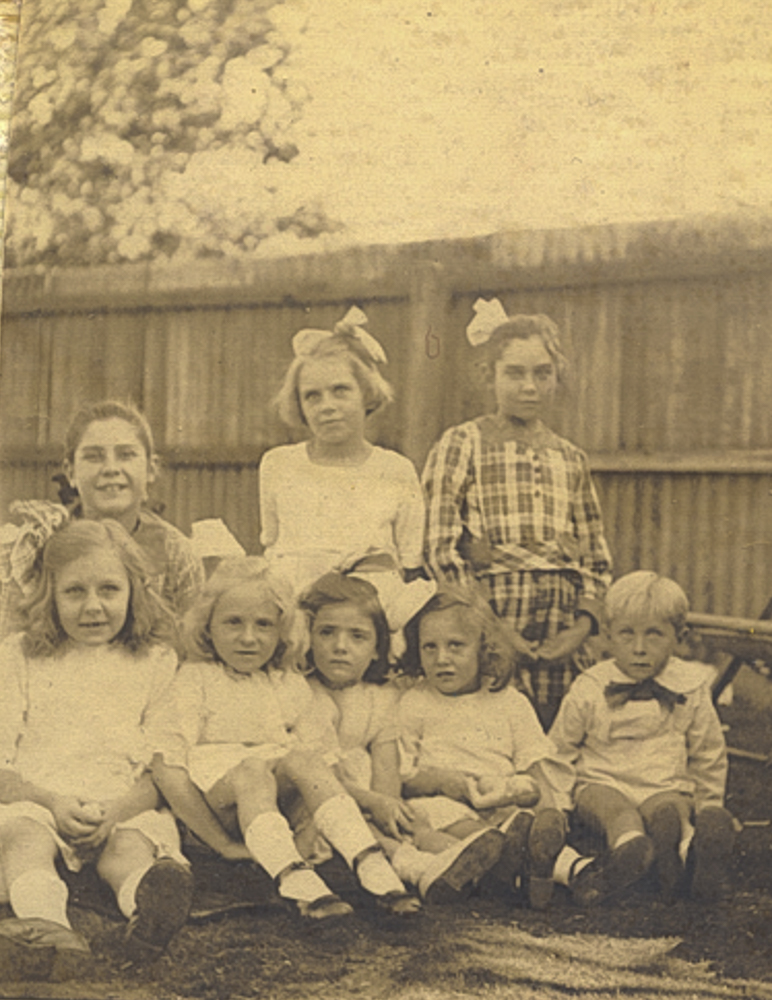 Doreen’s birthday party Simmer and Jack mine. My mother is seated, second from the right. Circa 1922
And as for the black mineworkers: they assumed more skilled positions underground but continued to live in single sex compounds and work on annual contracts. They migrated annually from their rural homes to the Rand. Gouveia de Lemos, a Mozambican miner wrote:
I put on a clean shirt
and go to work my contract
Which of us
which of us will come back?
Four and twenty moons
Not seeing women
Not seeing my ox
Not seeing my land.
Which of us,
which of us will die?.
References
Callinicos, L. Gold and Workers. Ravan Press, 1981
South African History Online. https://sahistory.org.za/article/fanakalo-language-mining-culture
“Workers of the World Fight and Unite for a White South Africa”:
Marks, Steven G. The Rand Revolt, the Red Scare, and the Roots of Apartheid. https://www.researchgate.net/publication/339230654_Workers_of_the_World_Fight_and_Unite_for_a_White_South_Africa_The_Rand_Revolt_the_Red_Scare_and_the_Roots_of_Apartheid