Love and marriage in the winelands
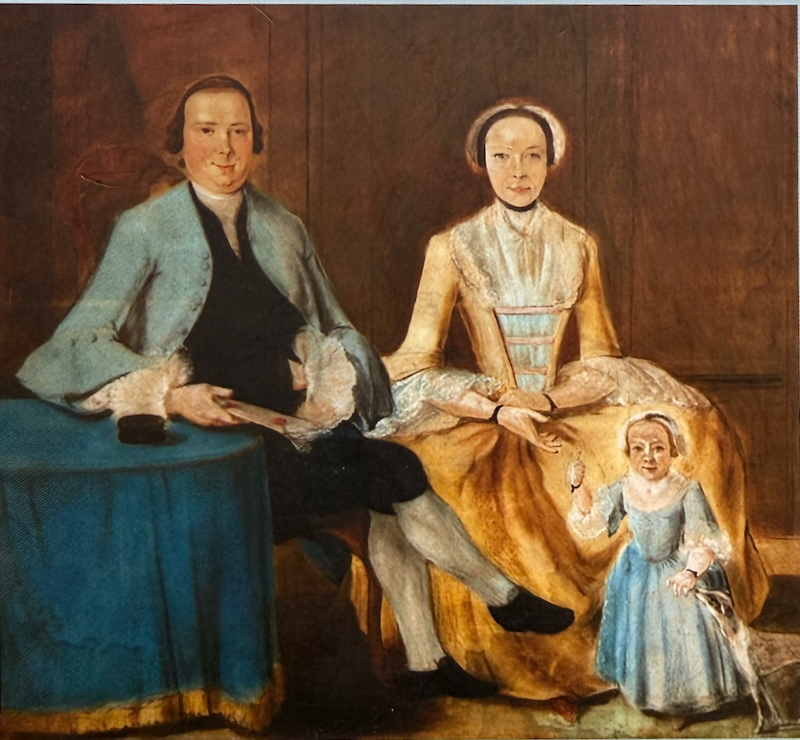
In 1707 my seventh great-grandfather Hermanus Lambertus Bosman survived a terrifying journey on the high seas and sought refuge in the Cape colony (see Rough Passage). In response to his pleas the Dutch East India Company (VOC) appointed him as sick-comforter or lay preacher to the Drakenstein district, a peaceful spot inland from the settlement.
Although his congregation was small, and the church little more than a barn, his new post was a welcome one. Around half of his 200 parishioners were French Huguenot refugees who had fled religious persecution in Europe some twenty years earlier. Most had become successful farmers and were well-integrated into the community—their children went to Dutch schools, and they accepted the teachings of the Dutch Reformed Church.
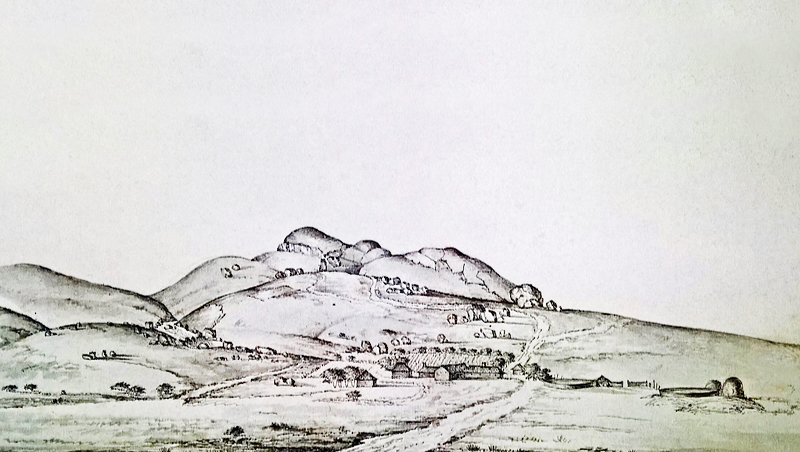 Drakenstein valley circa 1710. Huguenot Memorial Museum.
As lay preacher, Bosman’s job was to visit the sick, counsel condemned prisoners, read the bible, lead the singing at Sunday church service, publish banns and deal with other church affairs. Bosman was given accommodation in the house of one of the leading members of the congregation, the wealthy Huguenot farmer, Abraham de Villiers. (See Invisible Ancestors ). Abraham had arrived in 1689 with his three brothers, and by now he had acquired several farms in the district. He and his wife Susanne (nee Gardiol) had six living children.
It had been some time since the district had had a minister and Bosman was welcomed by the community. Soon Bosman was at home in this new environment and within a year he married the eldest daughter of his host, 18-year-old Elizabeth de Villiers.
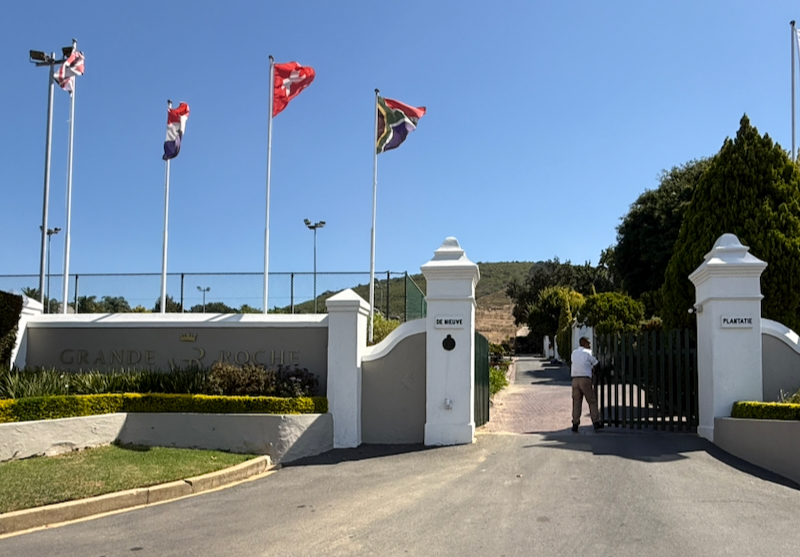 De Nieuwe Plantatie, Paarl. Photo Lesley Lawson March 2026.
De Niuewe Plantatie
The VOC granted Bosman a plot of two morgen (less than 2 hectares) outside Paarl, which he named De Nieuwe Plantage/Plantatie. The couple built a small house where they raised ten children during a 57-year marriage. Hermanus also received land from his father-in-law and on which he planted fruit trees and vines.
Bosman continued to work as a sick comforter for 41 years, assisting the ministers that were sent to the district. With his salary from the church and income from the land, he became a wealthy man and a respected member of the community, way above his lowly status as a sick comforter.
The descendants of Herman and Elizabeth’s five sons are still numerous in South Africa today and De Nieuwe Plantatie, which remained in the hands of the Bosman family until 1928, is now reincarnated as a five-star hotel named the Grande Roche.
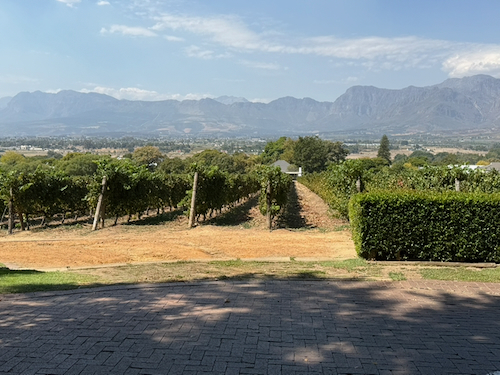 Grand Roche vineyard. Photo Lesley Lawson, March 2026.
Blood kinship
Since embarking on my research, I discover I am (distantly) related to several of my friends. It is no coincidence that South African children call all adults Aunty or Uncle—they often are. In my family line there was so much intermarriage (endogamy) between the de Villiers and the Bosman families, and between the de Villiers’ themselves, that it is challenging to draw their family tree in two dimensions.
For starters, two of the three original Huguenot De Villiers brothers — Jacques and Abraham — married two Gardiol sisters, so their offspring were related on both sides of the family: double cousins? Then Jacques’ son married Abraham’s granddaughter, Susanna Joubert, when she was only 16 years of age. Susanna died in childbirth one year later leaving a daughter Susanna de Villiers (born 1736).
This Susanna de Villiers then married my sixth great-grandfather, Izak Bosman (ie the grandson of her great-grandfather Abraham). Meanwhile Susanna’s widowed father remarried, and his son born of the second wife, married Anna de Villiers—the great grand-daughter of Pierre Villiers, the eldest of the original three de Villiers brothers.
If that doesn’t make your head spin, Magdalena de Villers, the daughter of the same Pierre, married her first cousin Jacque’s son, David de Villiers. Historian Marq de Villiers, in his chronicle of the de Villier’s clan, White Tribe Dreaming, claims that 12 out of the 32 grandchildren of Jacques and Marguerite married back into the family.
He remarks on these intermarriages saying that the genetic implications have never been discussed, though he quotes another family historian, Dan de Villiers, as saying that he has seen more of his share of manic depressives (sic) in the family.
However, I have come across one study in the scientific literature that hints at the legacy of these intermarriages. The researchers attribute the elevated familial cholesterol among the Afrikaans community to consanguinity or blood kinship. In the genetic literature this is known as the “founder gene” effect and has been found in many other isolated communities.
Consolidating skills and capital
It was long been believed that intermarriage in the early Huguenot settlement was due to a lack of suitable spouses in such a small colony. But historians have an additional explanation: it was a strategy to keep resources and skills within the family. They argue that the socio-economic success of French Huguenots descendants was due to the transmission of viticulture and wine-making skills, and amassing wealth and family influence. Karen de Bruin, Professor of French at University of Rhode Island writes: “These winemaking refugees created strategic alliances with other winemaking refugee families and encouraged their children to marry within this community or as often was the case, to marry back into the family… Indeed, this endogamy practiced by the small community of successful winemakers stood in stark contrast to the normative practice of exogamy by refugees outside of the wine industry.”
The practice was aided by Roman Dutch Law, which stipulated that the estate of a deceased father would be equally split between the widow and her children. Thus, widowed women were able to select the men they would remarry and to dictate the terms of the marriage. De Bruin concludes “…. marriages were, before anything else, strategic alliances to acquire and conserve vineyards, with the goal of attaining and maintaining wealth, power and elite status.”
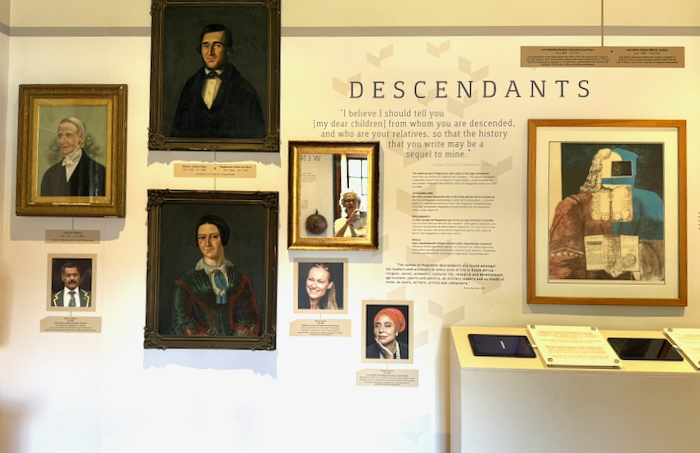 Huguenot Memorial Museum, Franschhoek. Photo Lesley Lawson, March 2026.
Opening photograph of Cape Dutch family from cover of Karel Schoeman Die Bosmans van Drakenstein 1705-1842.
References
*De Bruin, K. From Viticulture to Commemoration: French Huguenot Memory in the Cape Colony (1688-1824) Journal of the Western Society for French History. Volume 47, 2021.Permalink: http://hdl.handle.net/2027/spo.0642292.0047.007
*De Villiers, M. White tribe dreaming. Penguin, 1990.
*Huguenot Memorial Museum, Franschhoek. https://museum.co.za/
*Schoeman, K. Cape Lives of the eighteenth century. Chapter Two, Hermanus Lambertus Bosman. Protea, Pretoria, 2011.
*Schoeman, K. Die Bosmans van Drakenstein 1705-1842.Protea, Pretoria, 2010.
*Van der Westhuizen D et al, Low Density Lipoprotein Receptor Mutations in South African Homozygous Familial Hypercholesterolemic Patients. 1984, Arteriosclerosis: An Official Journal of the American Heart Association, Inc. doi 10.1161/01.atv.4.3.238
Family tree information from the Bosman family, wikitree.com; My Heritage and other genealogy sites.