There are still Bosmans farming in the western Cape, some 18 kilometres from Hermanus Bosman’s 18th century homestead, and one fine March day in 2026 I find myself en route to Lelienfontein farm outside Wellington.
Two friends have nobly agreed to drive me there. As we leave the industrial outskirts of the city, fruit orchards and vineyards dot the sides of the road, and a mountain range looms through the distant haze. I think of my Huguenot ancestors making this journey over 400 years ago. Twelve days in an ox wagon through indigenous bush that is hiding wild animals and who-knows-what noxious insects, and with no foreknowledge of what awaits. It’s no wonder the Gardiol sisters attached themselves to the older de Villier’s brothers in the same party.
We have nothing more challenging to deal with than the heat (38 degrees and rising) and the scary Cape Town freeways with their legendary offramps from the fast lane.
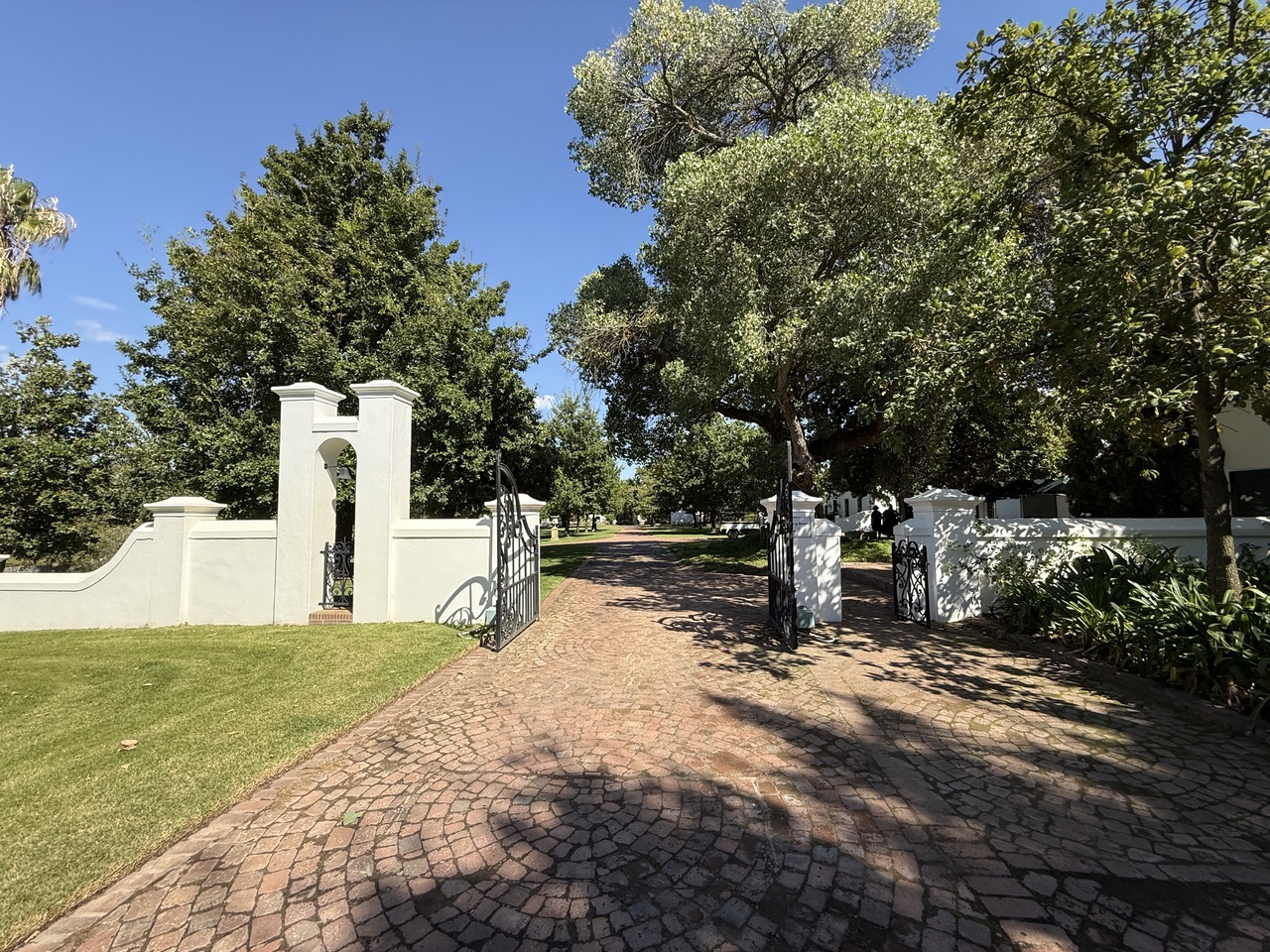
Just before we reach the Bosman vineyard we stop for refreshments at Cole Eatery, which turns out to be a heritage building, established as a wagonry in 1867. I imagine that the Bosmans were among many local farmers who called in to have their wagons repaired two centuries ago.
Eight generations
The story of the eight generations of Bosmans on Lelienfontein, has many kinks and turns, so bear with me...
The female line: In 1688 first party of Huguenot refugees were granted land along the Kromme river on the slopes of the Limietberg mountains that bordered the Cape colony. One of these farms changed hands many times until it landed up in the hands of Jacobus Malan in 1810. He bequeathed the farm to his son “Lang Kootjie”—a tall man who required an extra-long bed.
The male line: In 1842 Jan Christoffel Bosman, Hermanus Lambertus Bosman’s fourth great-grandson, disappeared mysteriously after discharging himself from a local hospital. His widow was remarried to an important Boer leader and moved with her son, Petrus Wilhelmus Jacobus Bosman (born 1861), to Heidelberg far to the north in the Transvaal Republic.
As a young man, Petrus visited the Western Cape on a mission to buy horses for his transport business, a journey that awoke a desire to return to the land of his ancestors. He bought a farm in the Wellington district. Living on the farm next door, Lelienfontein, was Lang Kootjie and his marriageable daughters. In good time Petrus Wilhelmus married Langkotjie’s daughter Sophia, and later bought Lelienfontein, which has been the Bosman home ever since
My Bosman family line diverges from the vineyard Bosmans some generations before this: my grandmother Joey Bosman and Petrus Wilhelmus shared a great-grandfather, Johannes (Jan) Christoffel (1790-1839).
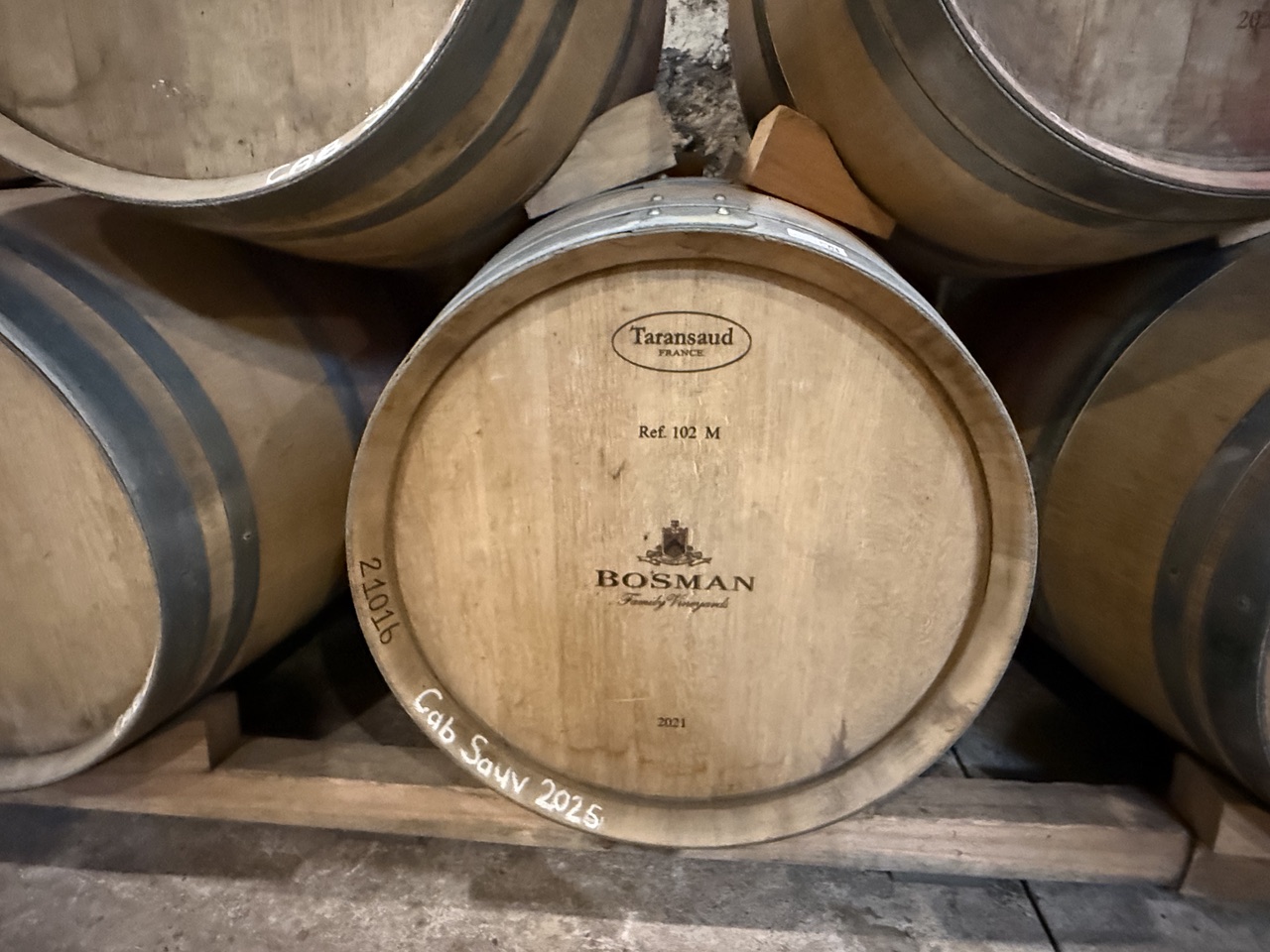
 Jannie Bosman in the original wine cellar.
Photograph Lesley Lawson, March 2026.
Heritage
Despite my being one of several thousand distant Bosman cousins, the family has extended their generous hospitality to our party. Jannie Bosman (snr) and communications chief Julia Moore greet and brief us outside the doors of the winery’s original cellar. Julia, a historian and wine buff, does most of the talking, but Jannie is standing by “to hear what she says about us”.
It’s not always easy to keep up with the story on account of the traditional Afrikaans naming pattern, which alternates Jan and Petrus for the eldest sons, but I am doing my best. (In my professional days I also would not have attempted to make notes and take photographs at the same time, but needs must.)
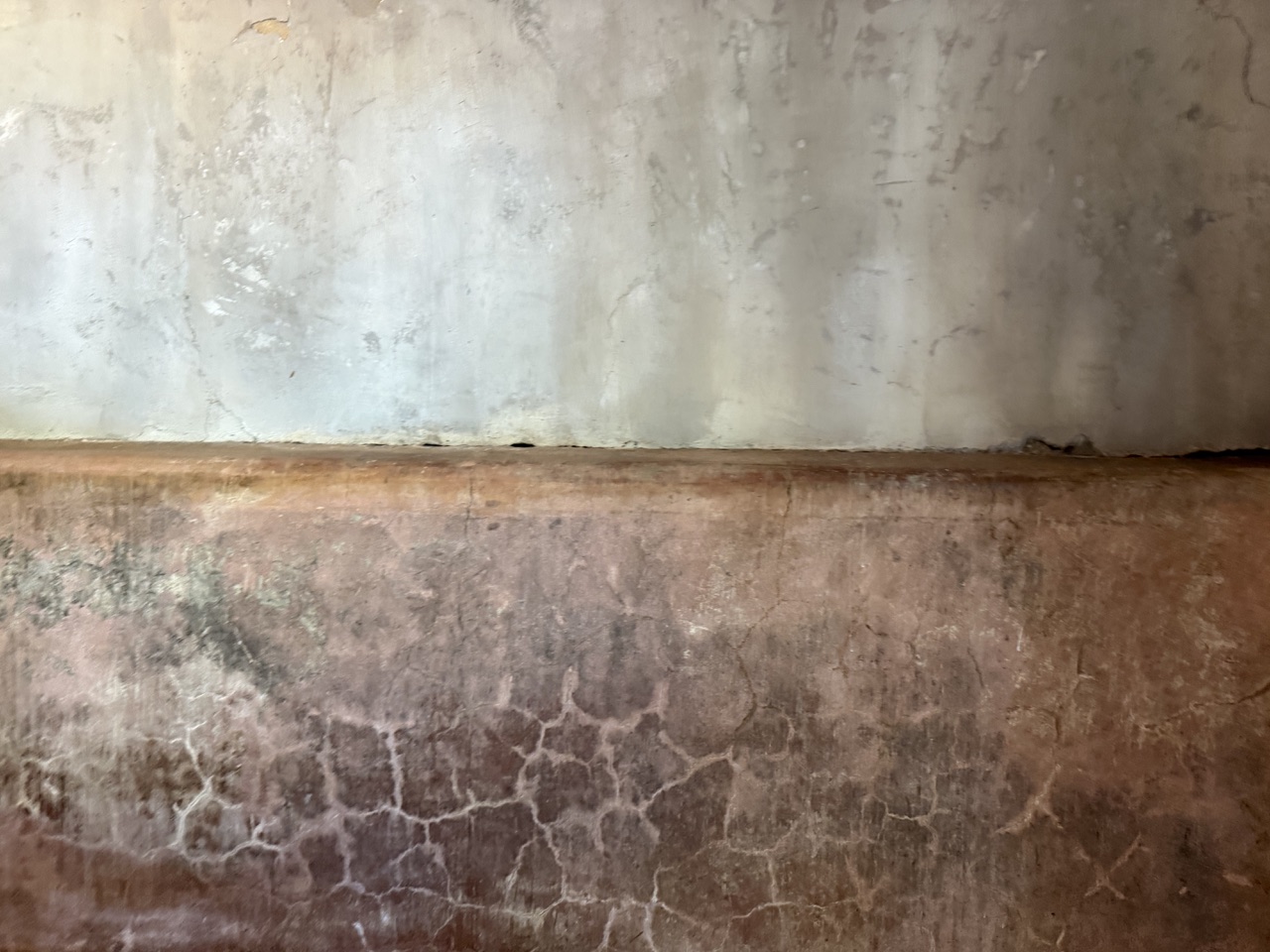
This historic building, which now houses the wine tasting room and cellar has been renovated to retain its original character. The walls are washed red with age-old stains from the grapes that were crushed by foot in wooden vats. Jannie leads us through the three high-ceilinged rooms while he expands on the history of the farm and the Bosman’s commitment to family and community.
The fortunes of the farm were changed forever by the late 19th century Phylloxera epidemic that eliminated vine stocks across the world. The solution lay in grafting vines onto Phylloxera-resistant root stock. Initially individual farmers created their own grafted plants (“stokkies”), but it was clear that there was a need for shared standards.
In 1956 Oupa Petrus Bosman (born 1925) responded to that need. He closed the Lelienfontien cellar and established a sizeable vine grafting nursery. The Bosman vineyards continued to produce quality grapes which were sent to the new Wellington Cooperative. Oupa Petrus also founded the Wellington Nursery Association and became a leading figure in the Western Cape wine nursery business.
It was only in 2007 that the appetite for making wine returned. Oupa Petrus’ grandson, Petrus Jnr, masterminded the renovation and expansion of the original cellars and the first vintage of Bosman Family Vineyard wines were produced.
By now the Bosman land holdings had expanded with the addition of several farms in the area as well as a vineyard in the Hemel-en-Aarde Valley outside Hermanus.
Sustainability
The stokkies business has shaped the Bosman enterprise in more ways than one. Unlike other wine farms that rely on a seasonal workforce to manage the harvest, the Bosman farms and vine nursery provide year-round employment. This has supported a stable core of employees who know the land and understand the rhythms of the work. This is invaluable for the well-being of the vineyards. Many in the farm worker community can trace their ancestry on the farm back through five generations to a single progenitor, Adam Appollis (also known as Adama, biblical term for land).
Jannie explains that in the reform era of the 1990s the family responded by establishing a formal workers committee. In 2008 a collaborative venture between the Bosmans and the workers (now the Adama AppolloTrust) was launched, giving 260 of the longest serving employees a 26% stake in the business and land. “It seemed like the right thing to do,” he says.
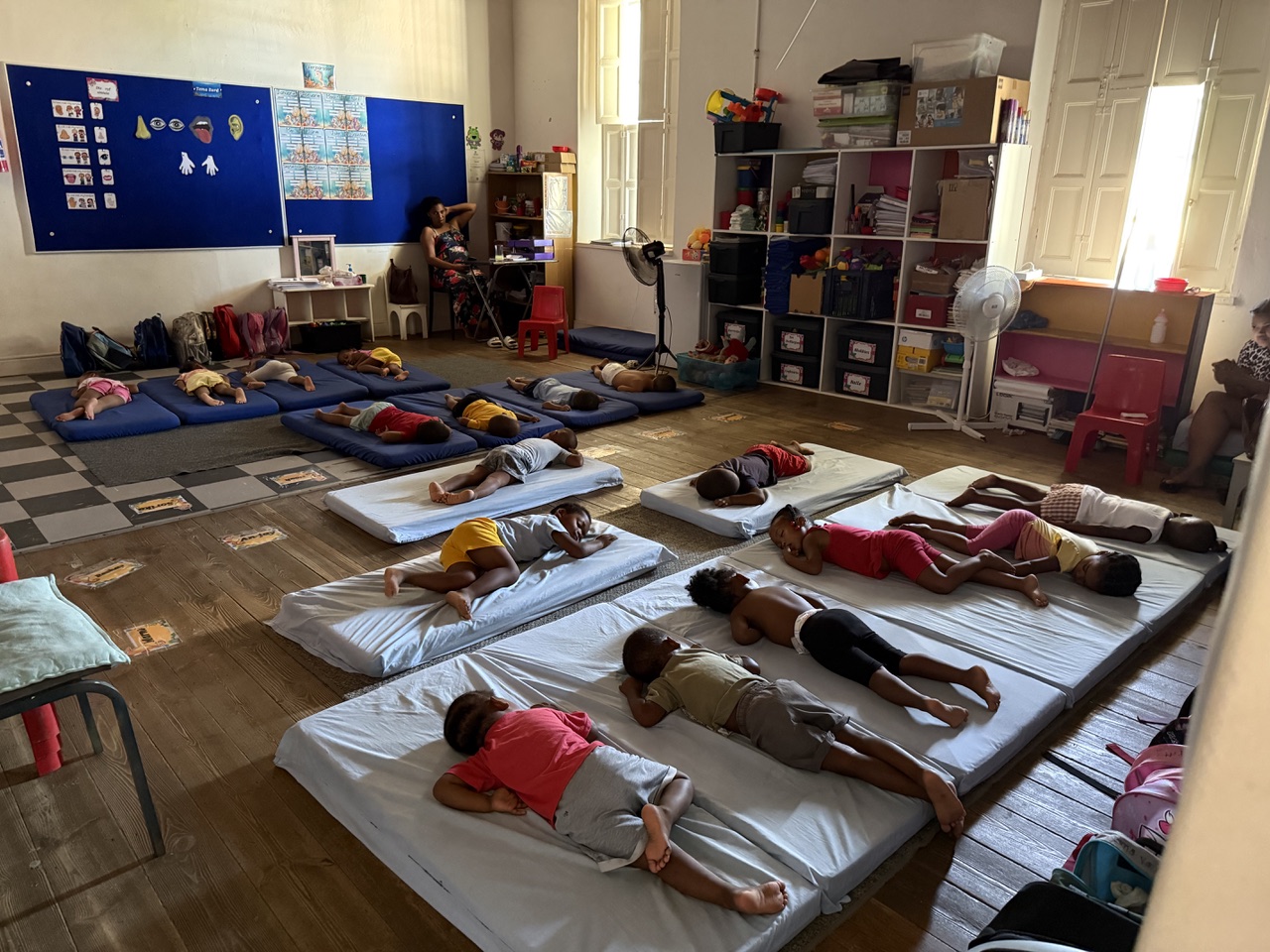
In 2009 Bosman Adama wines received Fairtrade accreditation which unlocked considerable funding for the Adama Trust. This enabled the development of the Bovlei Community Centre which houses a crèche for the children of employees, as well as a clinic. Other projects benefit older children and their parents such as evening classes and sports clubs.
The farm worker community have a genuine stake in the farm’s sustainability, for themselves and their offspring, which ensures the success of the business. A recent offshoot is Adama Wines, an all-black, all female producer with their own brand the HER Wine Collection, in which Bosman Adama has minority holdings.
 Sampling award-winning wines in the tasting room. Photograph Lesley Lawson, March 2026
Innovation
We are seated in the airy tasting room as Jannie describes the Bosman approach to cultivation and wine making. When he joined the business in 1979, he brought a new enthusiasm for innovation in the vine nursery. Because the nursery supplies so much of the Western Capes vine stock, he explains, it is important to keep ahead of the trends. Climate change means that plants must be better adapted to hot, dry conditions. Different varieties are grown in the Lelienfontein test plot, where they assess the quality of grapes and small batches of wines that are made from them.
After a research trip by Petrus to Sicily, they experimented with south Mediterranean grapes. The wine Nero, which we are now tasting is the first one to be registered. (I am not a wine aficionado, but I can tell you that is extremely delicious!).
New varieties are also selected for their resistance to pests, which cuts down on pesticides. Experiments with compost tea have also reduced the need for compost. Although some of the vineyards have been farmed organically the Bosmans take a regenerative approach to their farming practices:it is challenging to keep up with organisc certification over a wide area.
But some of the old ways are the best: the Bosman grapes are still picked by hand to ensure top quality. Mechanised harvesting, which is now more common, bruises grapes and causes the tannins from the skin to leach into the wine.
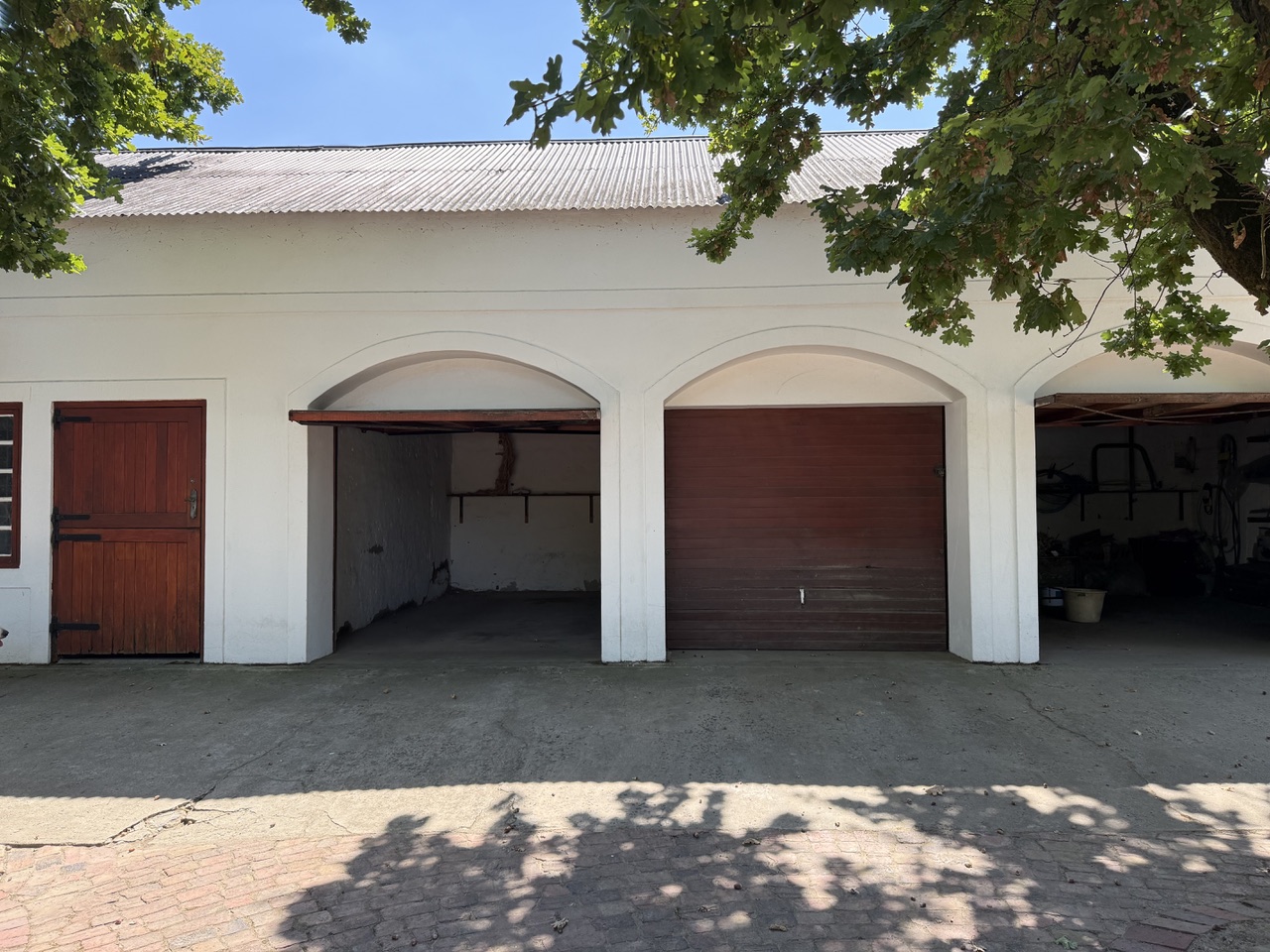 The original house on Lelienfontein, Photograph Lesley Lawson, March 2026.
Past and future
On our way out of Lelienfontein we stop at a small oblong building, which was the original farmhouse on this plot. This is an example of the first houses in the valley, which simply consisted of three interleading rooms with an entrance at the end. A far cry from the gracious Cape Dutch architecture that characterises the winelands today. This building now houses equipment and relics from the past, including a locked room with Bosman family portraits. I feel sad that the ancestors are shut away in the dark, but perhaps, for now, they must bide their time.
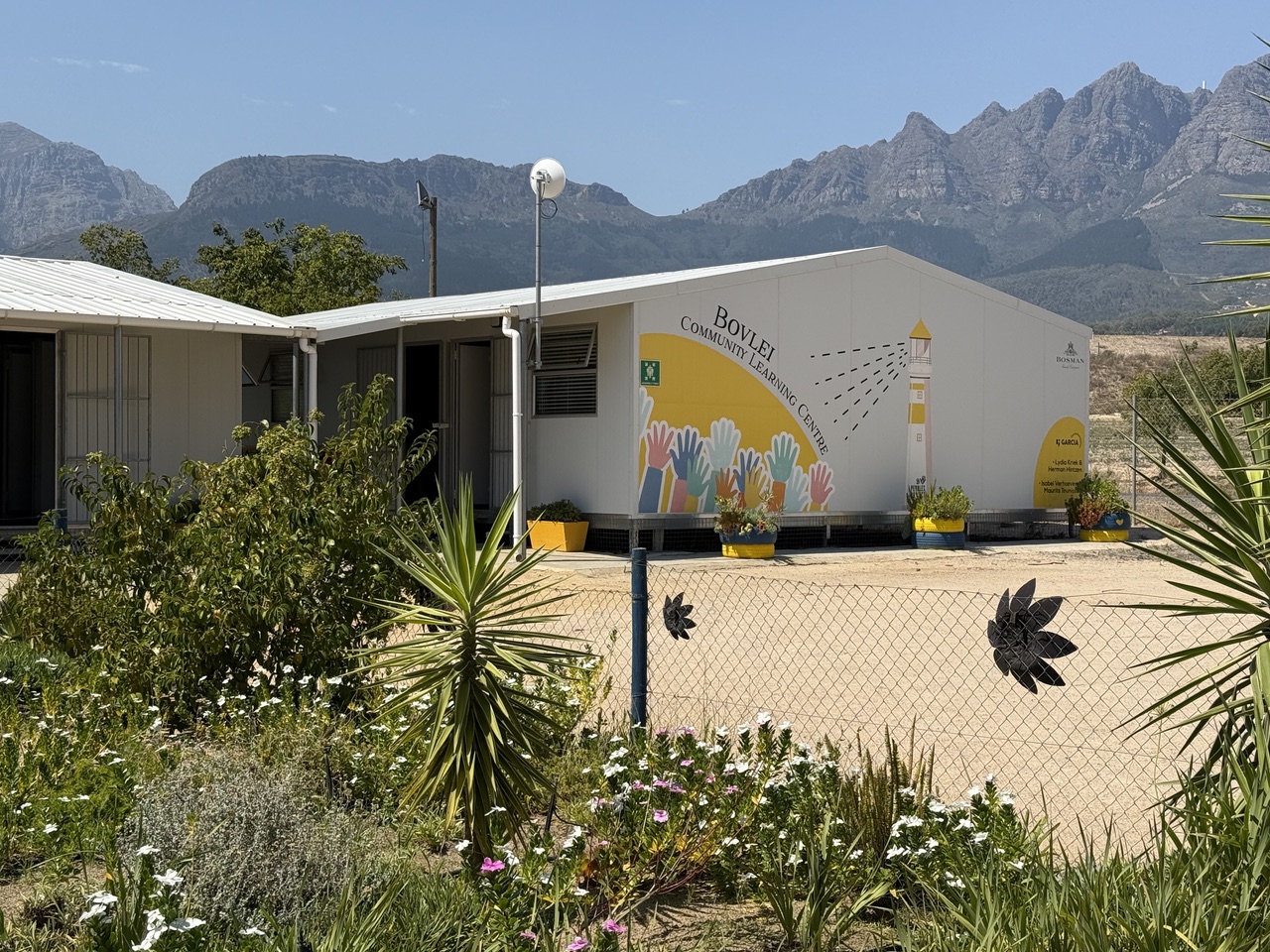 Bovlei Community Centre, Photograph Lesley Lawson, March 2026
There is one more call to make before we return to Cape town. Julie drives me down to the Bovlei Community Centre, nestled against the Limietberg mountains shimmering in the fierce sun. We hope to see the crèche in action, but it seems deserted. We tiptoe down the corridor, peering into the classrooms on either side, only to be greeted by the sight, and delicious silence, of children sleeping soundly in the heat.